

































The right t-shirt heat press delivers consistent transfers, maintains accurate temperature, and withstands continuous production without premature failure. Choosing incorrectly leads to uneven pressure distribution, temperature drift, scorched garments, and costly equipment replacement within months instead of years.
Heat press selection determines transfer quality, production speed, and operating costs. A poorly matched press creates bottlenecks that limit output, increases defect rates, and forces workflow workarounds that compound over time. Understanding pressure mechanisms, platen design, and control systems prevents these failures and supports sustainable growth.
This guide breaks down the technical requirements for t-shirt heat presses, compares design types, explains pressure and temperature control systems, and provides decision frameworks for matching equipment to production volume and transfer method.
Understanding Heat Press Function and Requirements
A t-shirt heat press transfers designs onto fabric by applying controlled heat and pressure for a specific duration. The equipment must maintain consistent temperature across the entire platen surface, deliver even pressure distribution, and allow precise timing control. These three variables determine transfer success.
Temperature consistency prevents uneven curing. Hot spots cause scorching while cool zones leave adhesive partially bonded. Quality presses maintain temperature within 5°F variance across the platen. Lower-grade units show 15-20°F swings that create visible quality differences across a single garment.
Pressure distribution affects bond strength and durability. Uneven pressure leaves sections of the transfer poorly adhered, causing premature peeling or cracking after washing. Heavy pressure concentration at platen edges while centers receive inadequate force indicates poor mechanical design or worn components.
Digital control systems improve repeatability. Manual analog controls require constant monitoring and adjustment between cycles. Digital systems hold temperature automatically and provide countdown timers that eliminate guesswork. This difference matters significantly in production environments where consistency directly impacts customer satisfaction.
Clamshell vs Swing-Away: Design Trade-offs
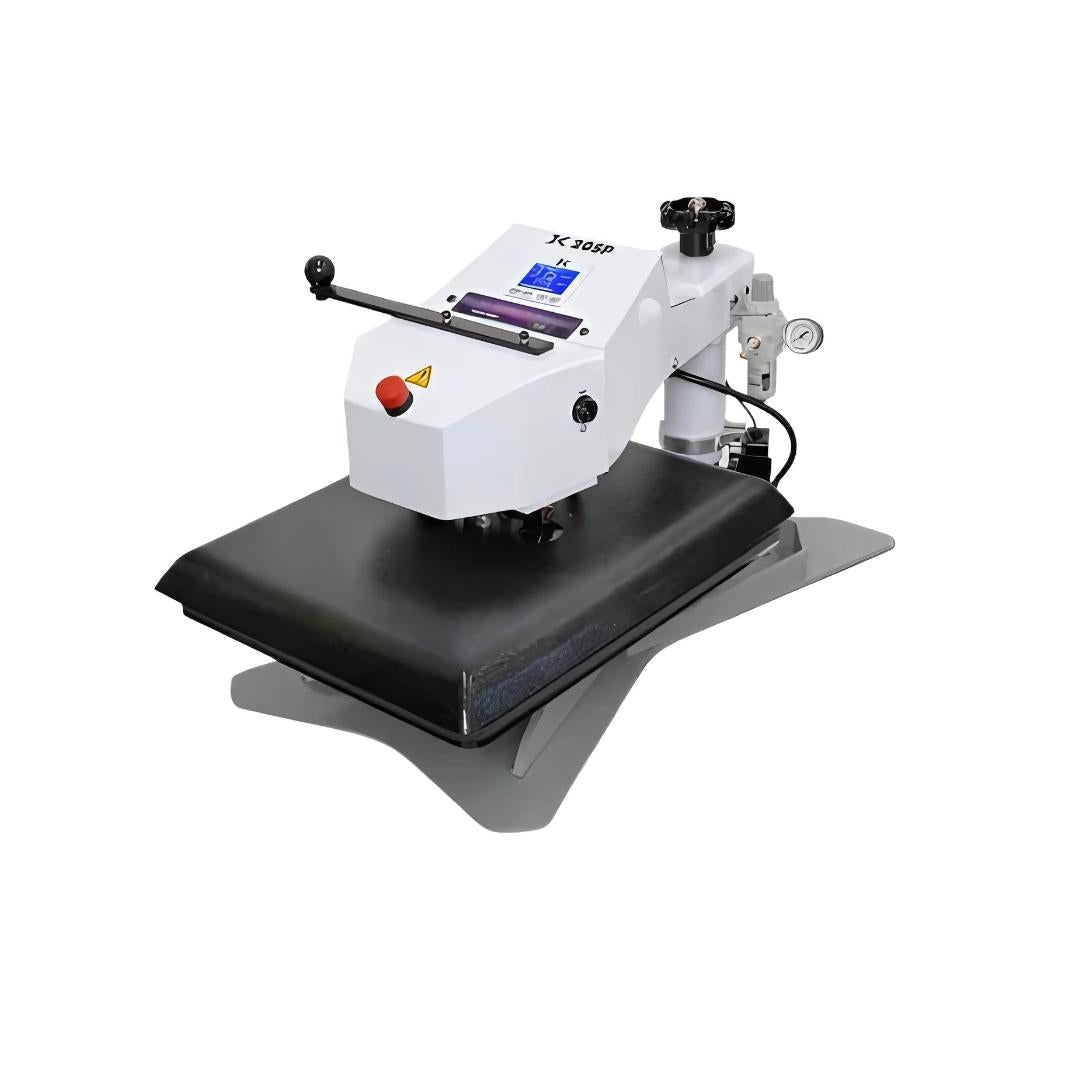
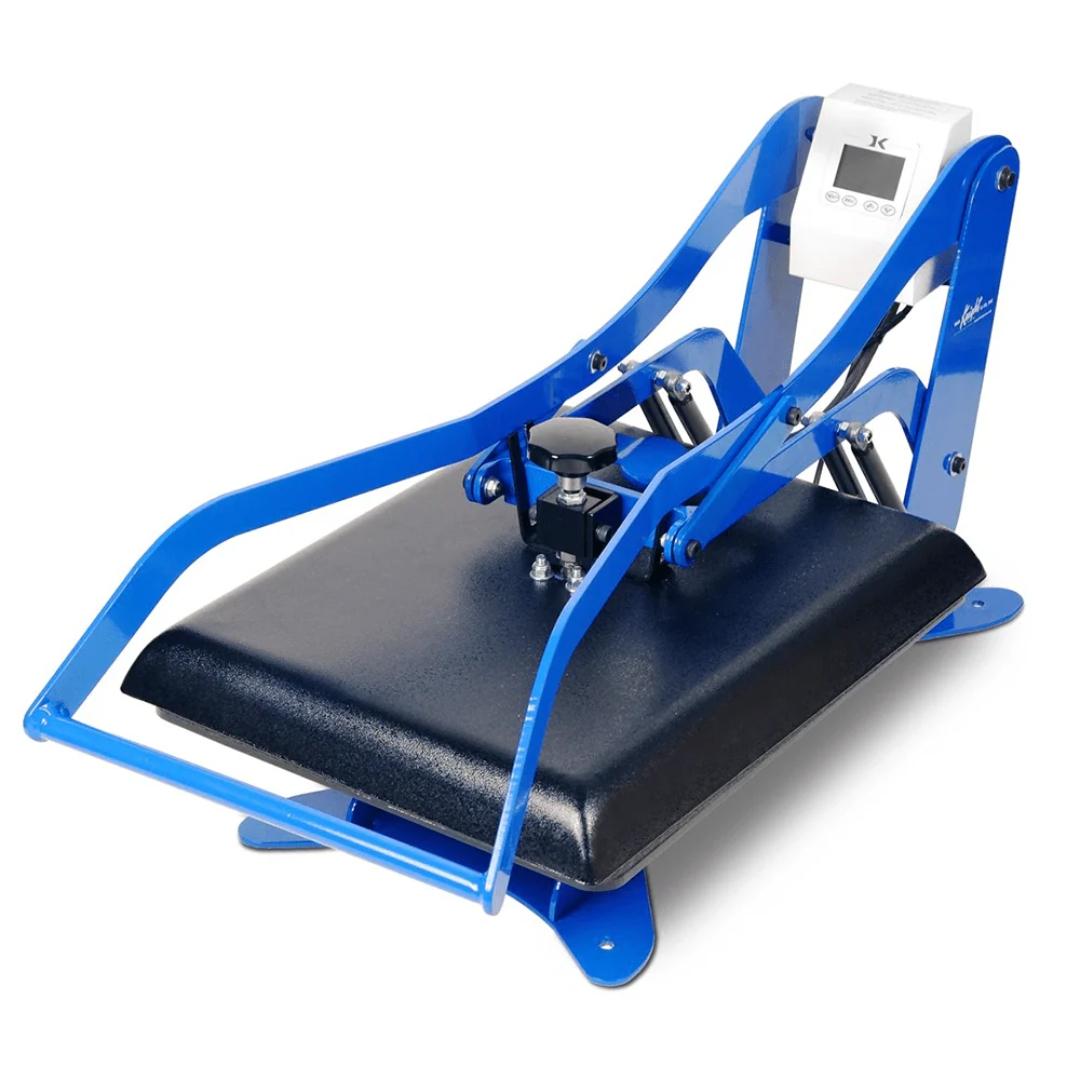
Two primary heat press designs dominate the t-shirt market: clamshell and swing-away. Each offers distinct advantages and limitations that affect workspace requirements, transfer quality, and operator safety.
Clamshell Design

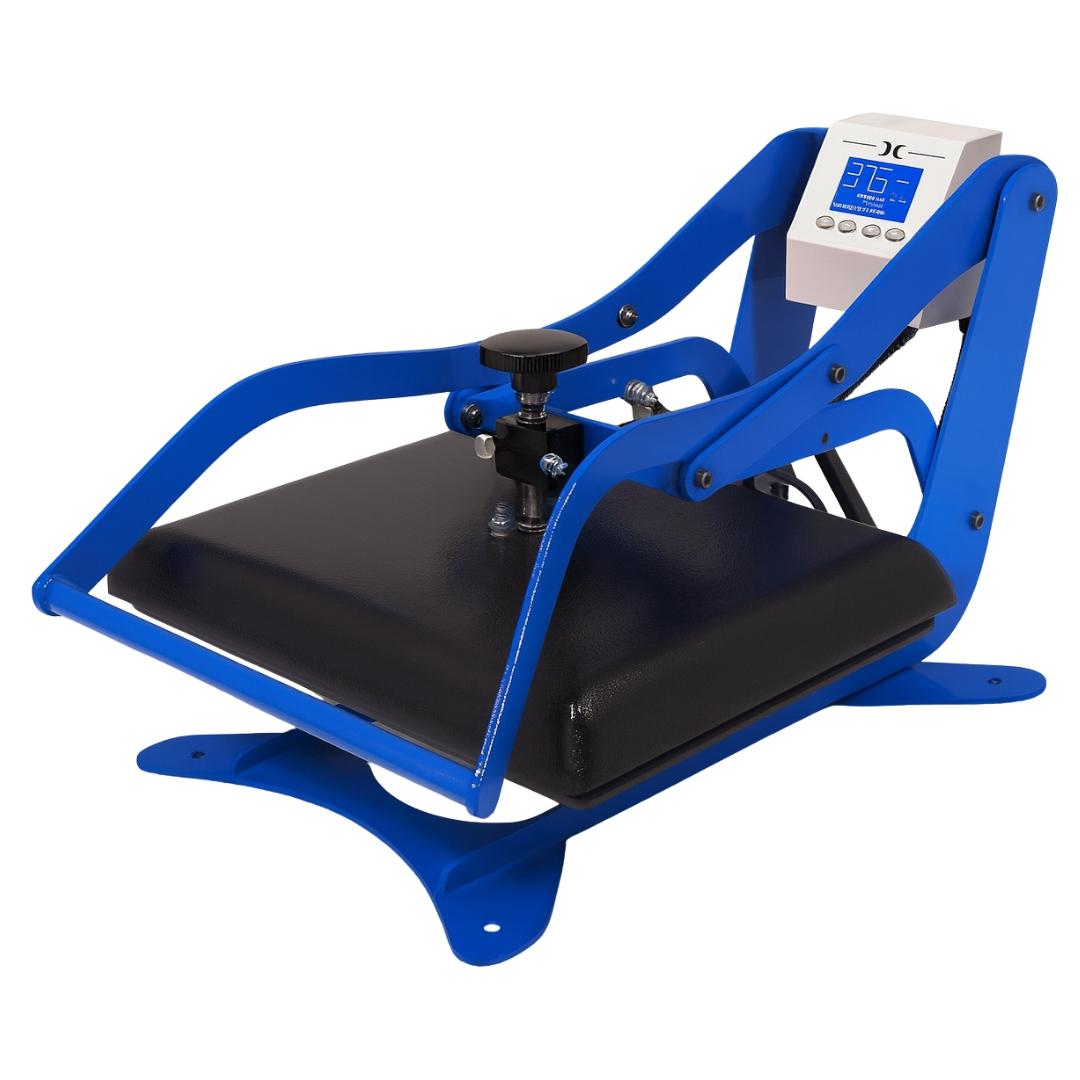
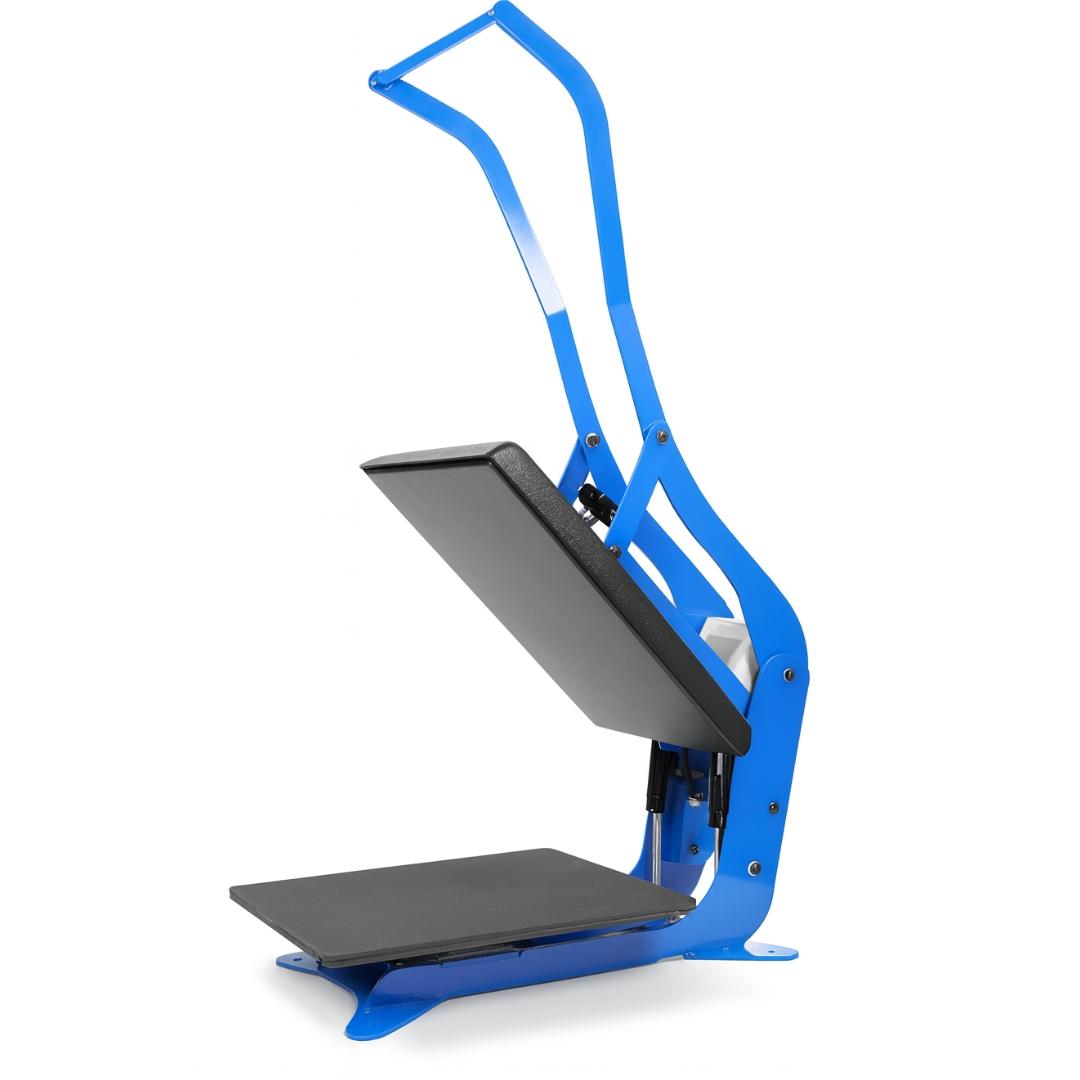
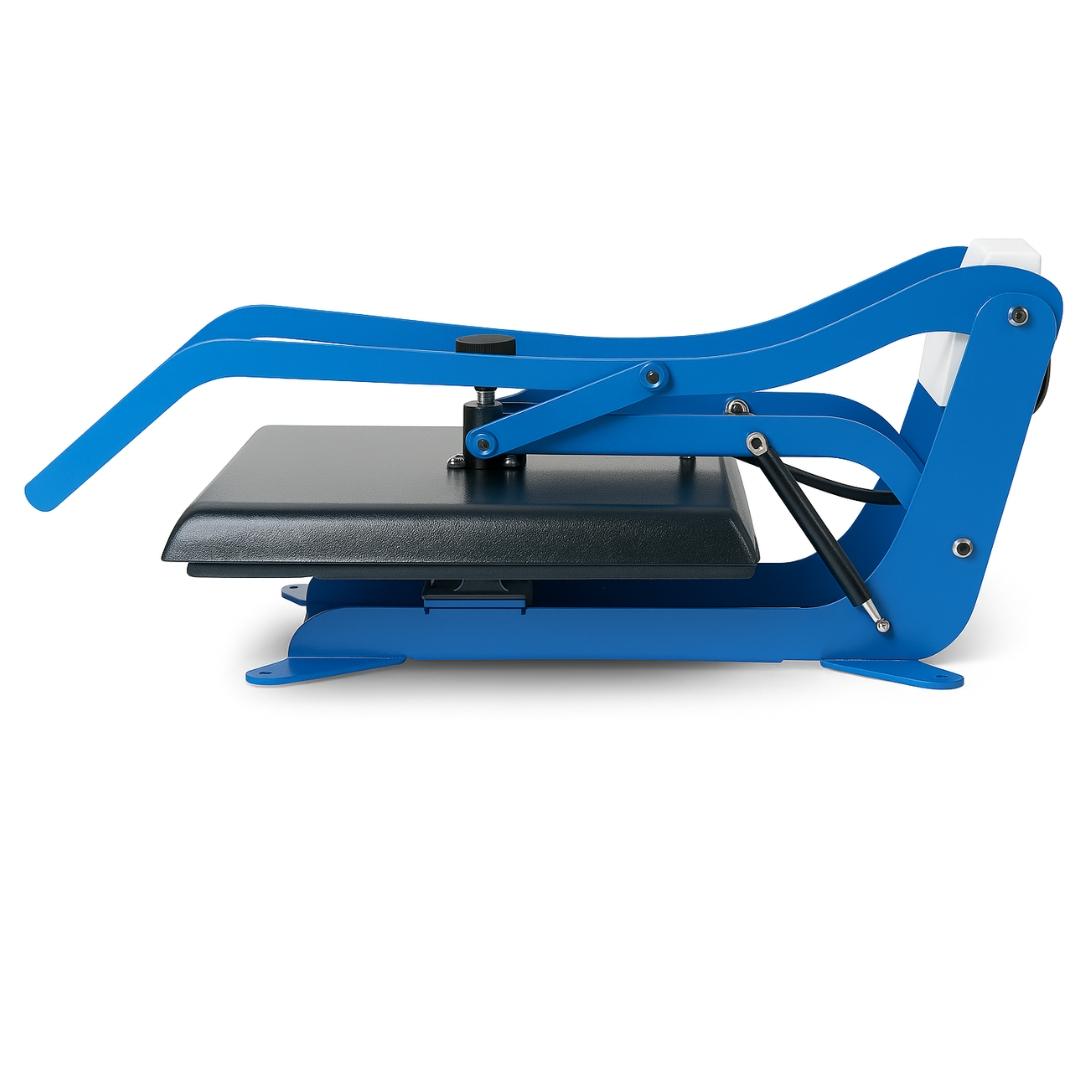
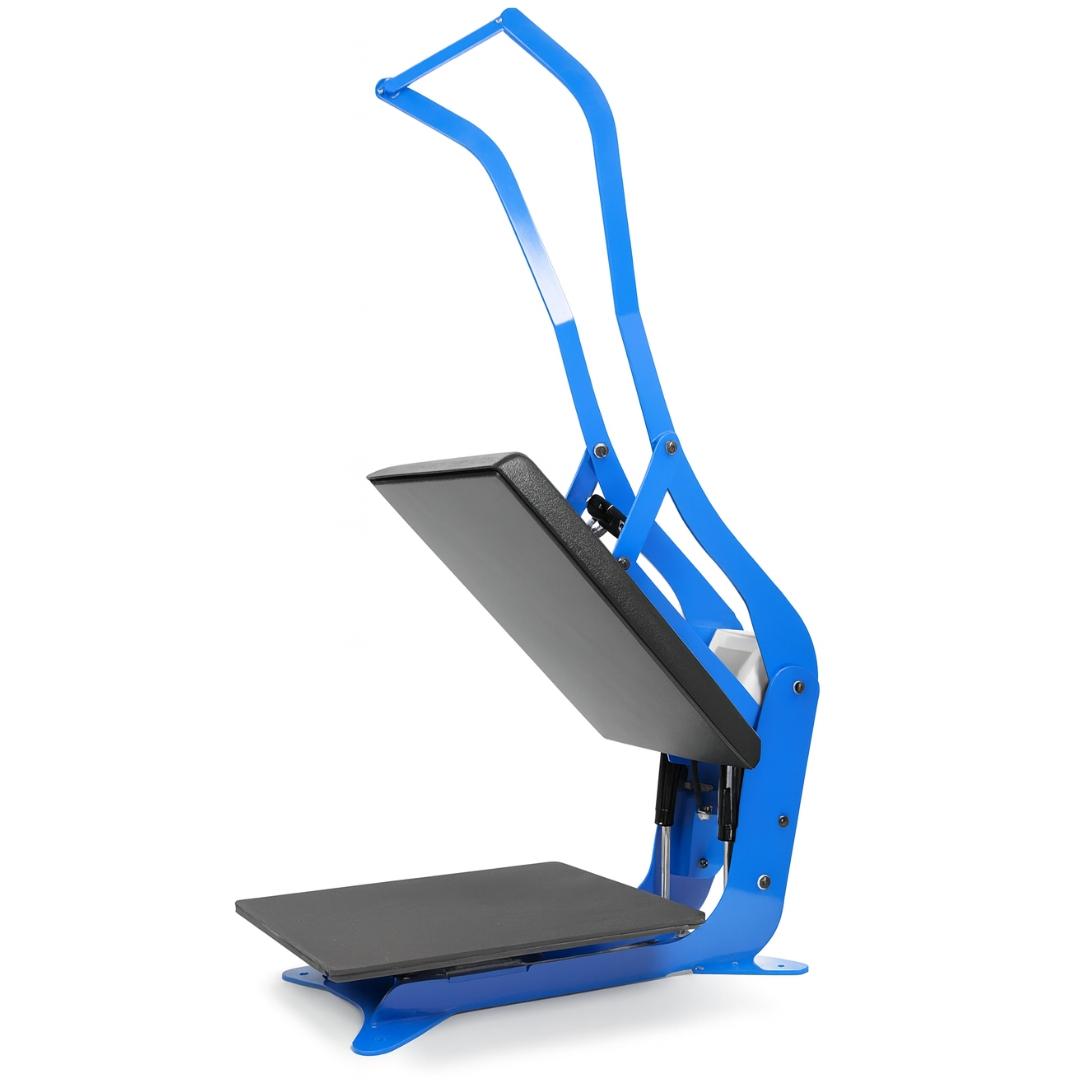
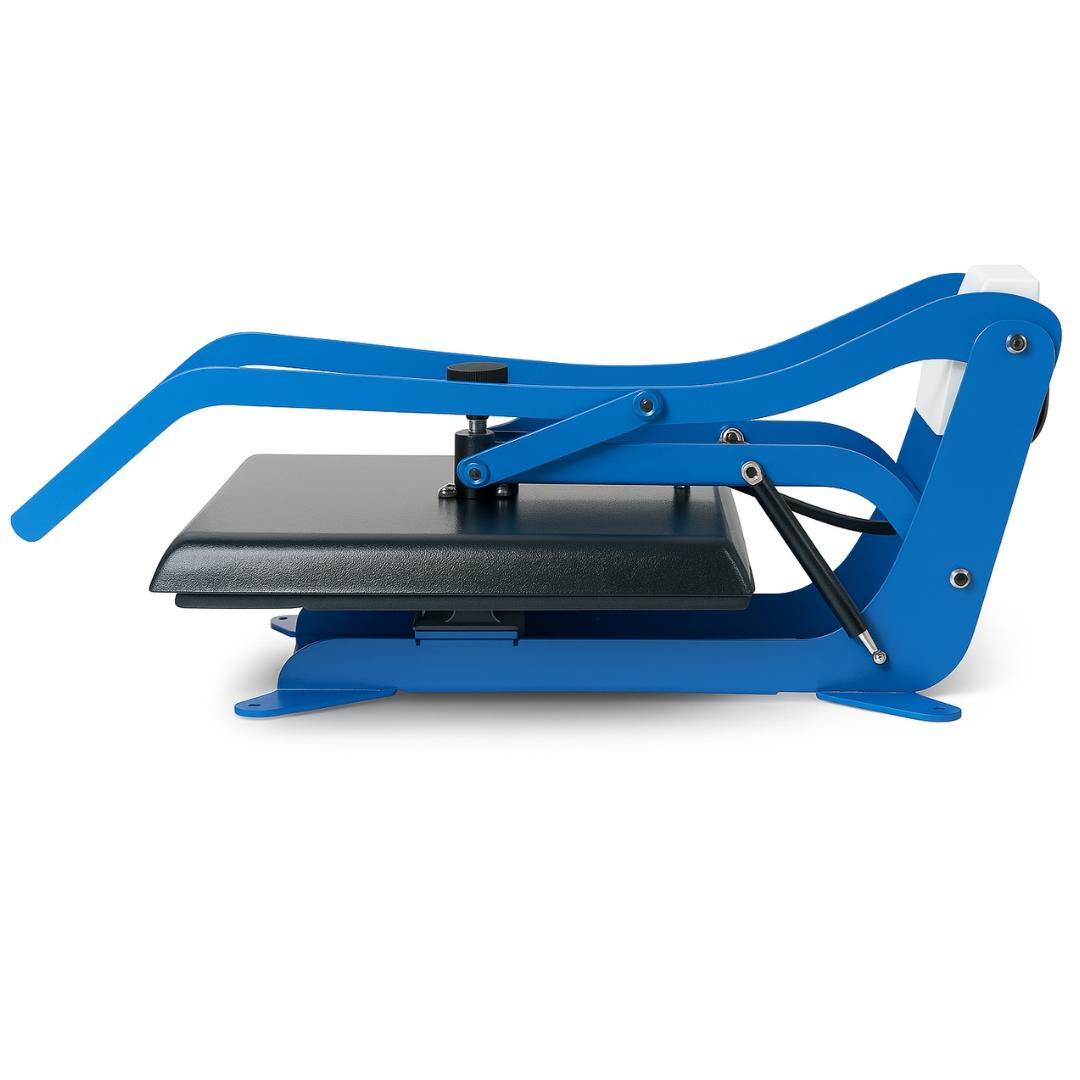
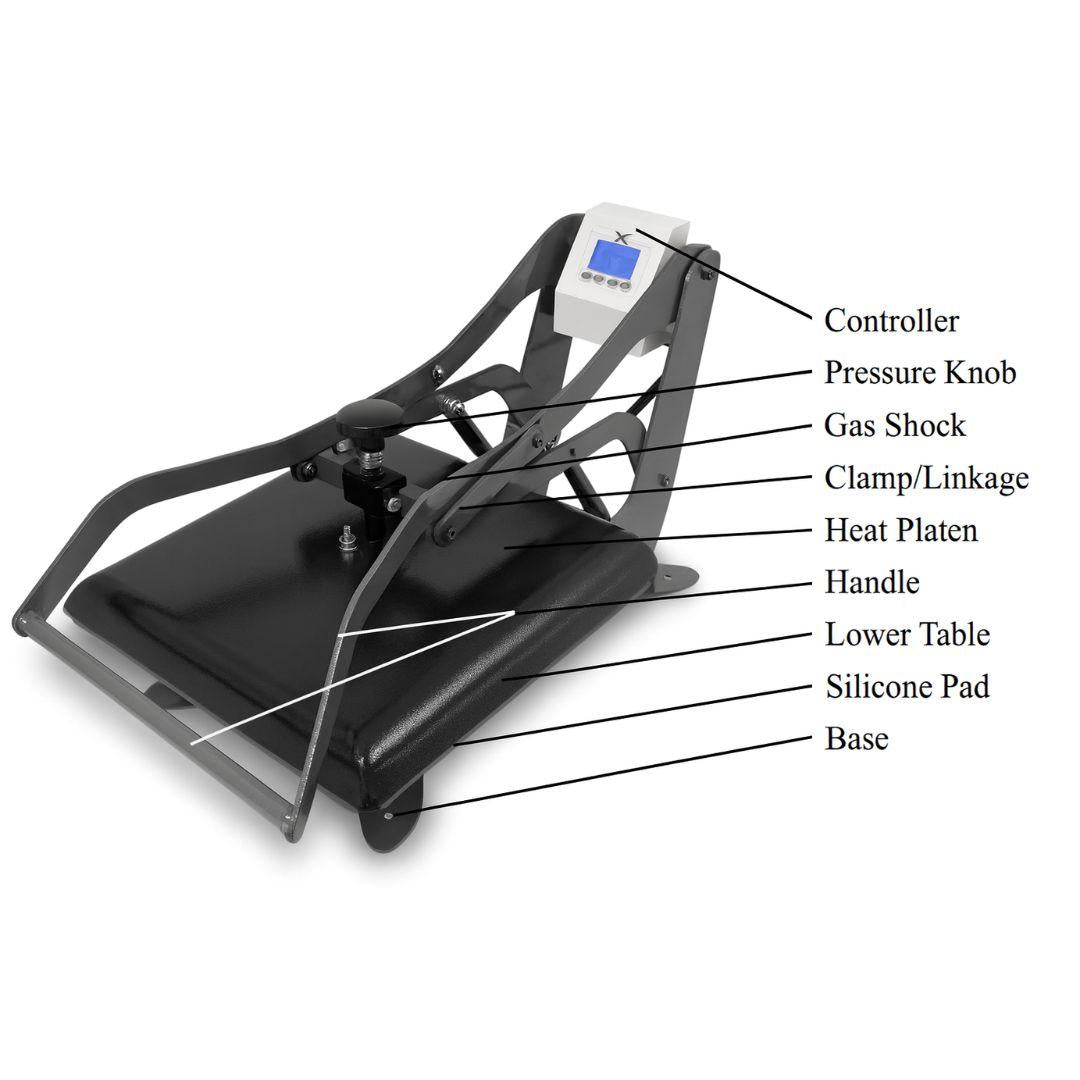
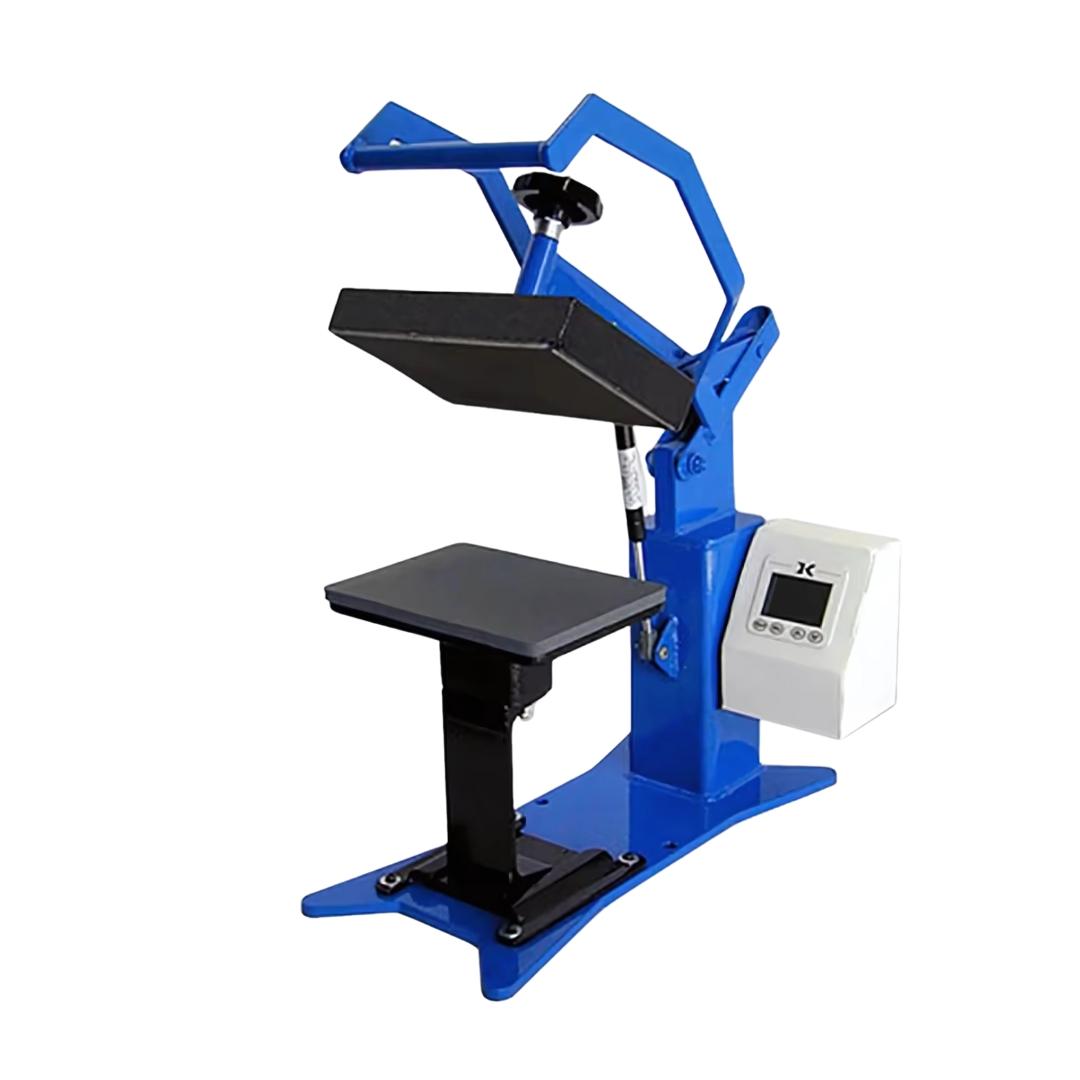
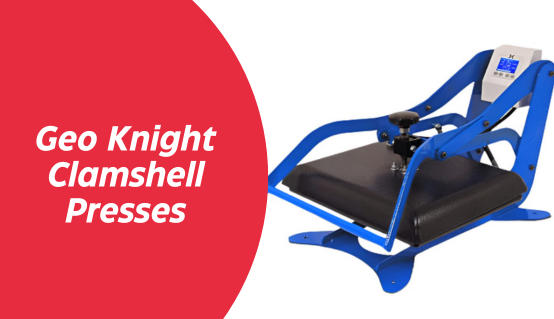
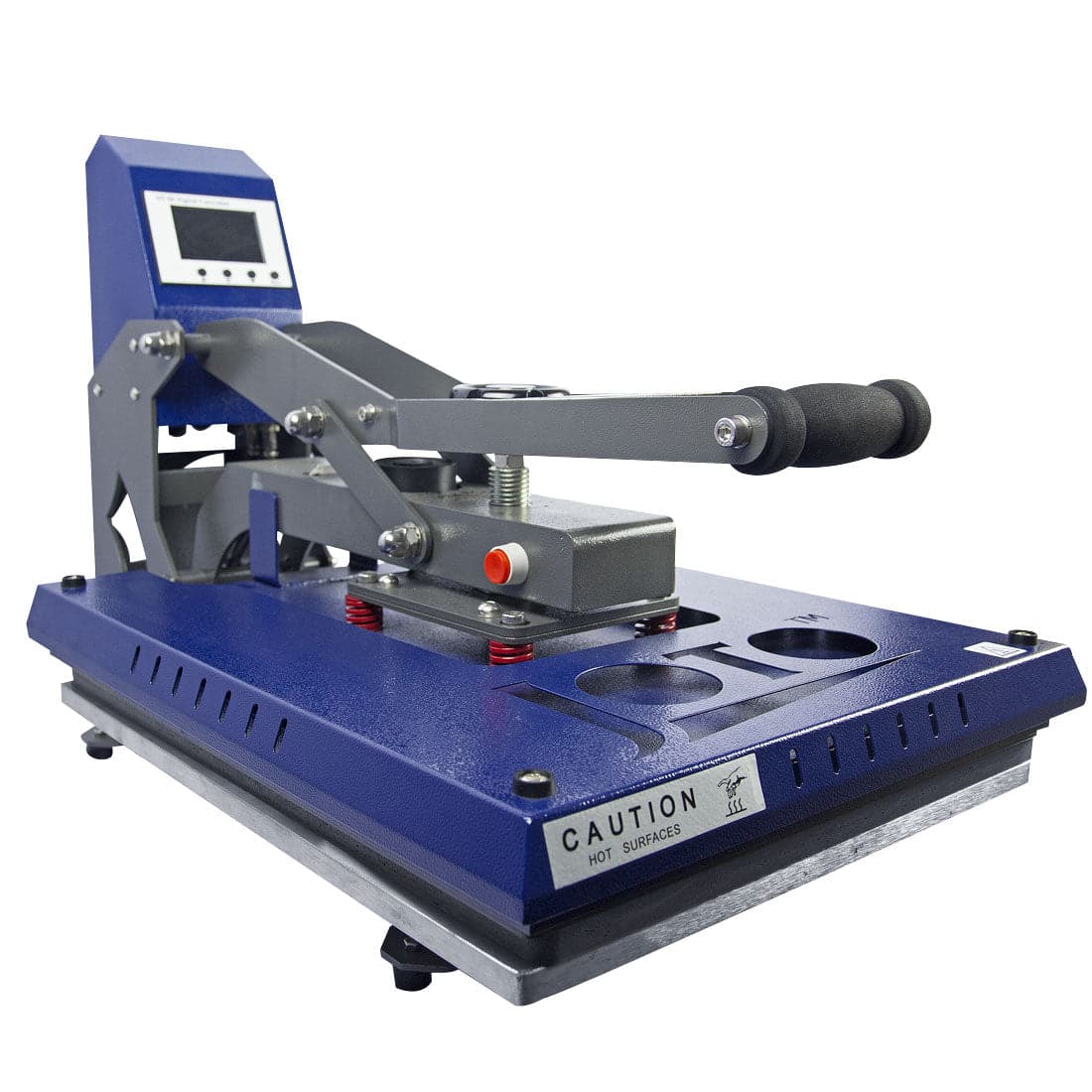
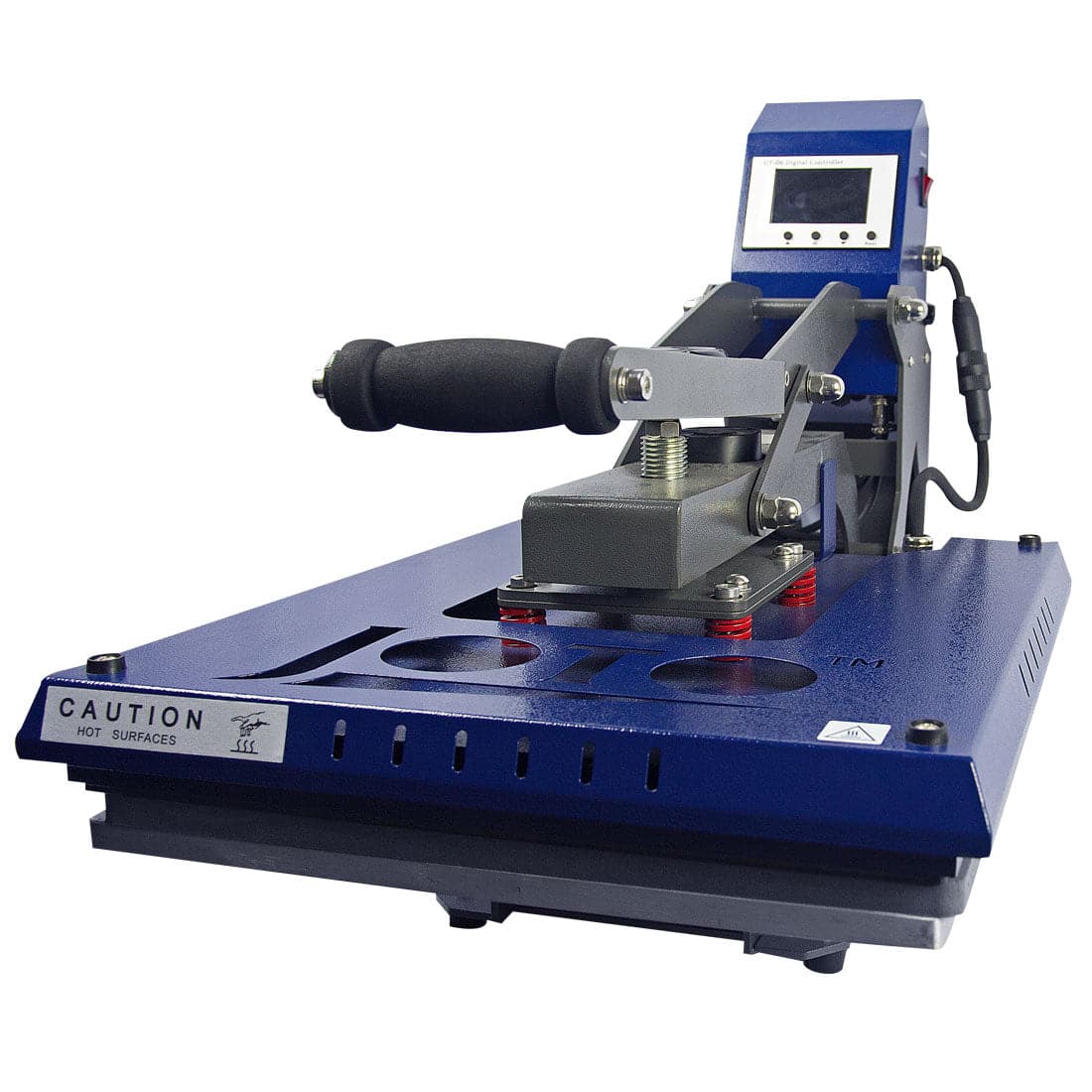
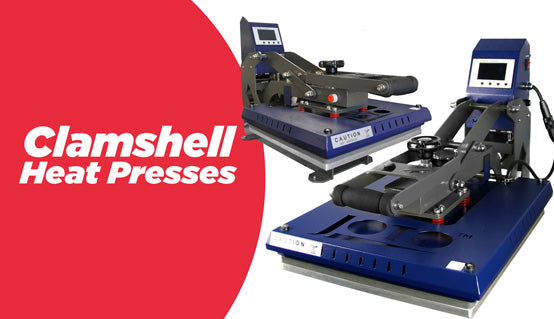
Clamshell presses open vertically like a clamshell, with the upper platen hinging upward from the rear. This design offers several advantages:
- Compact footprint - Requires minimal floor space since the press doesn't swing outward during operation
- Ideal for small workshops - Perfect for mobile businesses or space-constrained environments
- Lower entry cost - Generally less expensive than comparable swing-away models
However, clamshell geometry creates ergonomic challenges. Operators must reach over the lower platen to position garments, bringing hands closer to the heated upper platen. This proximity increases burn risk, especially during rapid production cycles. The vertical opening also limits visibility of the transfer area during positioning.
Clamshells work well for flat garments like t-shirts and tote bags. They struggle with thick or uneven items because the hinge point limits how far the upper platen can rise. This restriction becomes problematic when pressing multiple layers or bulky garments.
Swing-Away Design

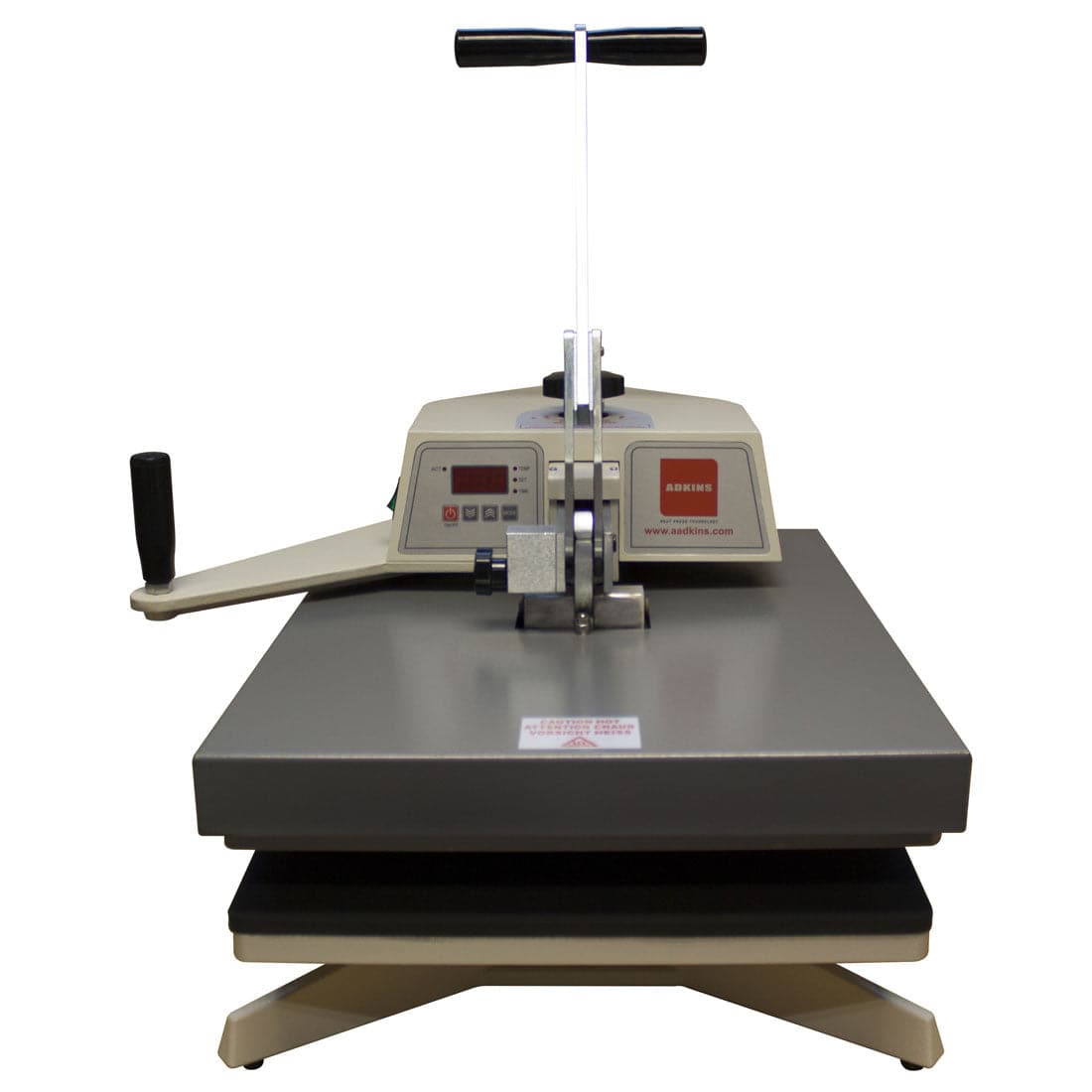
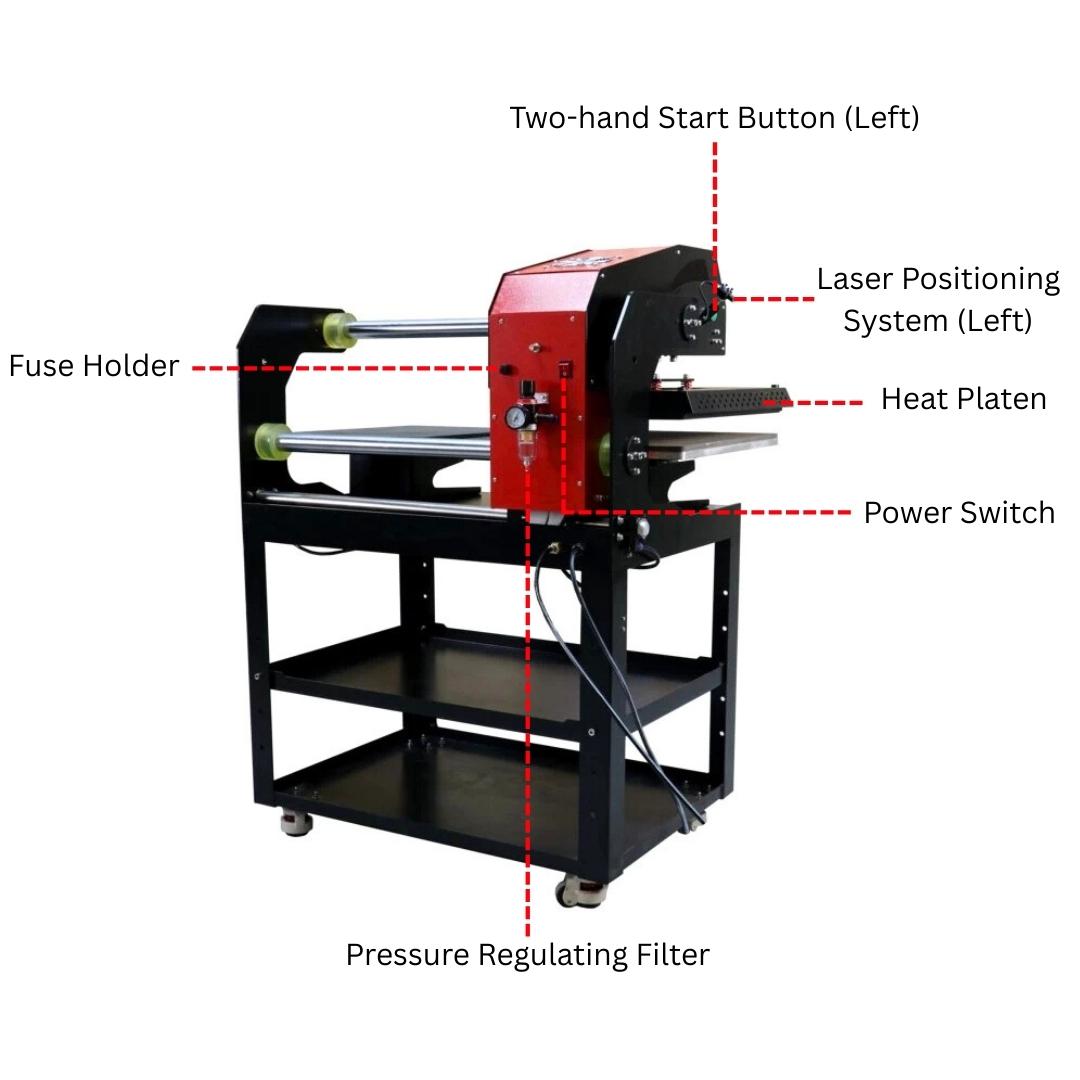
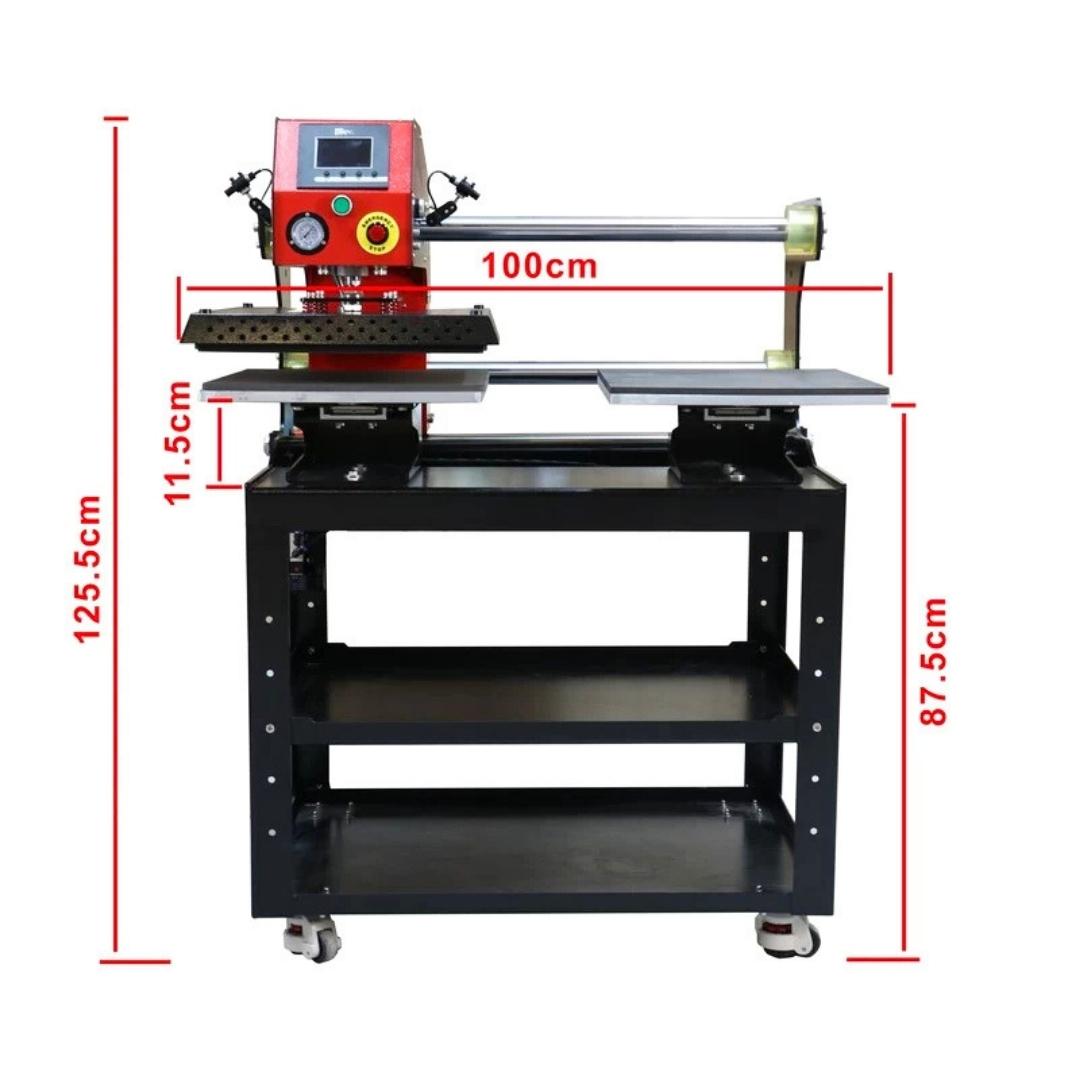
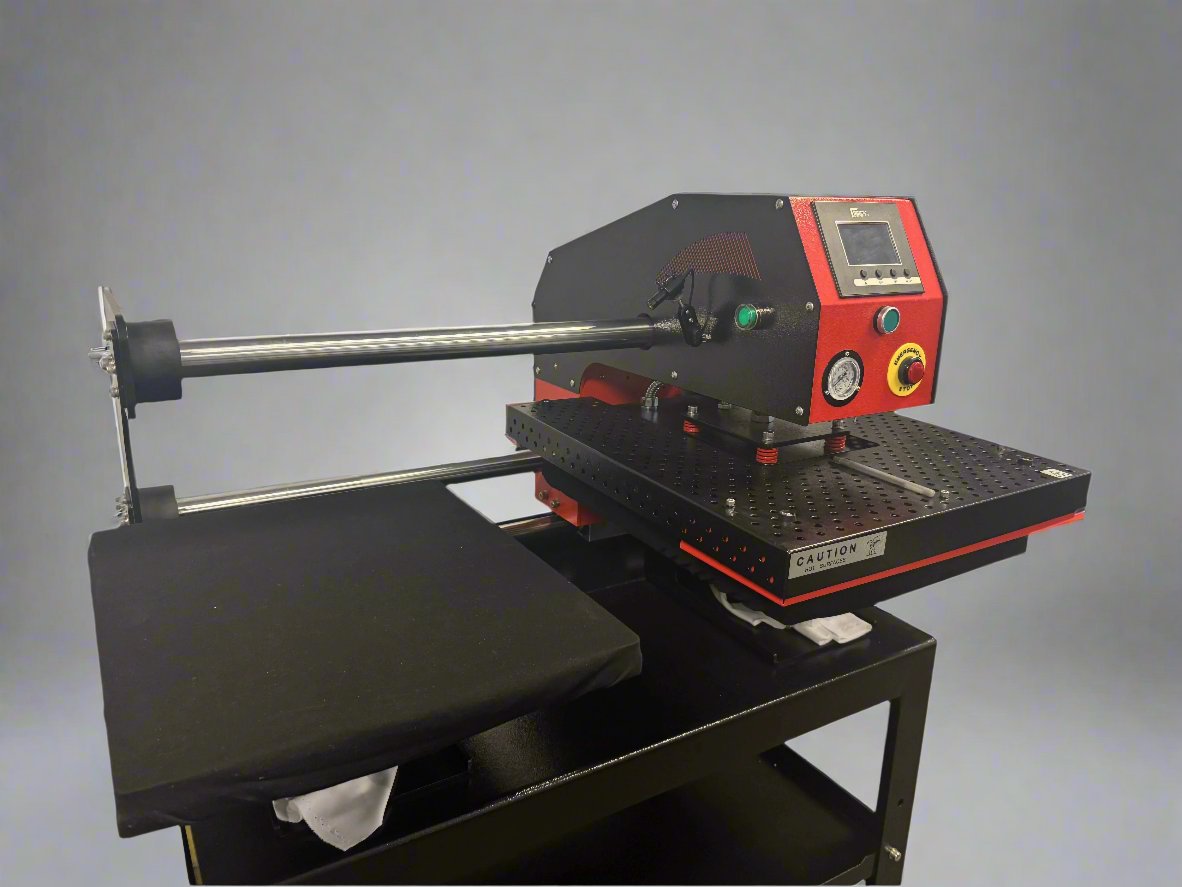
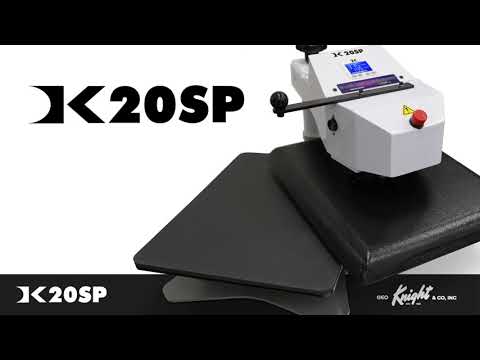
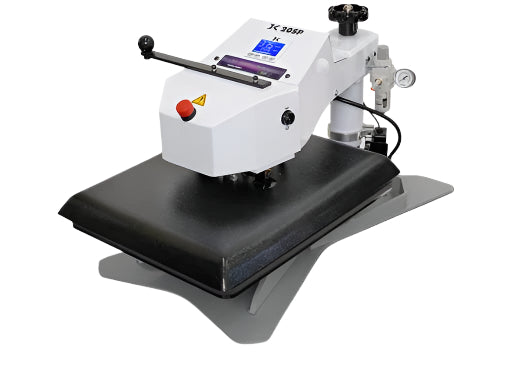
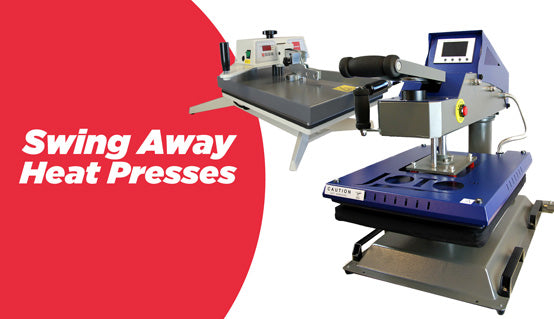
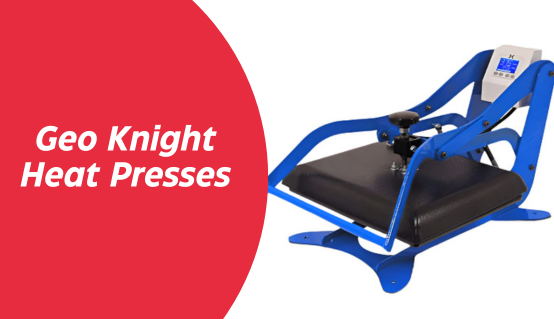
Swing-away presses rotate the upper platen away from the lower platen, typically 90 degrees to the side. This design provides key advantages:
- Complete safety clearance - Eliminates the need to reach over hot surfaces during garment positioning
- Better visibility - Full view of the transfer area for precise design placement
- Handles thick items - Unlimited clearance for bulky garments, multiple layers, seams, and zippers
- Reduced operator fatigue - Ergonomic design suitable for extended production shifts
The swing-away mechanism handles diverse transfer applications beyond standard t-shirts effectively. Full separation allows positioning of bulky garments, multiple layers, or items with seams and zippers. This versatility supports varied product catalogs.
Swing-away presses require more floor space. The rotating upper platen needs clearance to swing freely, consuming workspace that could otherwise hold finishing equipment or inventory. Small shops may find this footprint requirement prohibitive.
Professional production environments often prefer swing-away designs despite the space cost. The ergonomic advantages reduce operator fatigue during extended shifts, and the mechanical separation improves safety compliance in commercial settings.
Pressure Systems and Adjustment Mechanisms
Pressure control determines transfer bond quality and influences equipment longevity. Heat presses use either manual mechanical systems or pneumatic systems to generate and adjust force.
Manual Pressure Systems
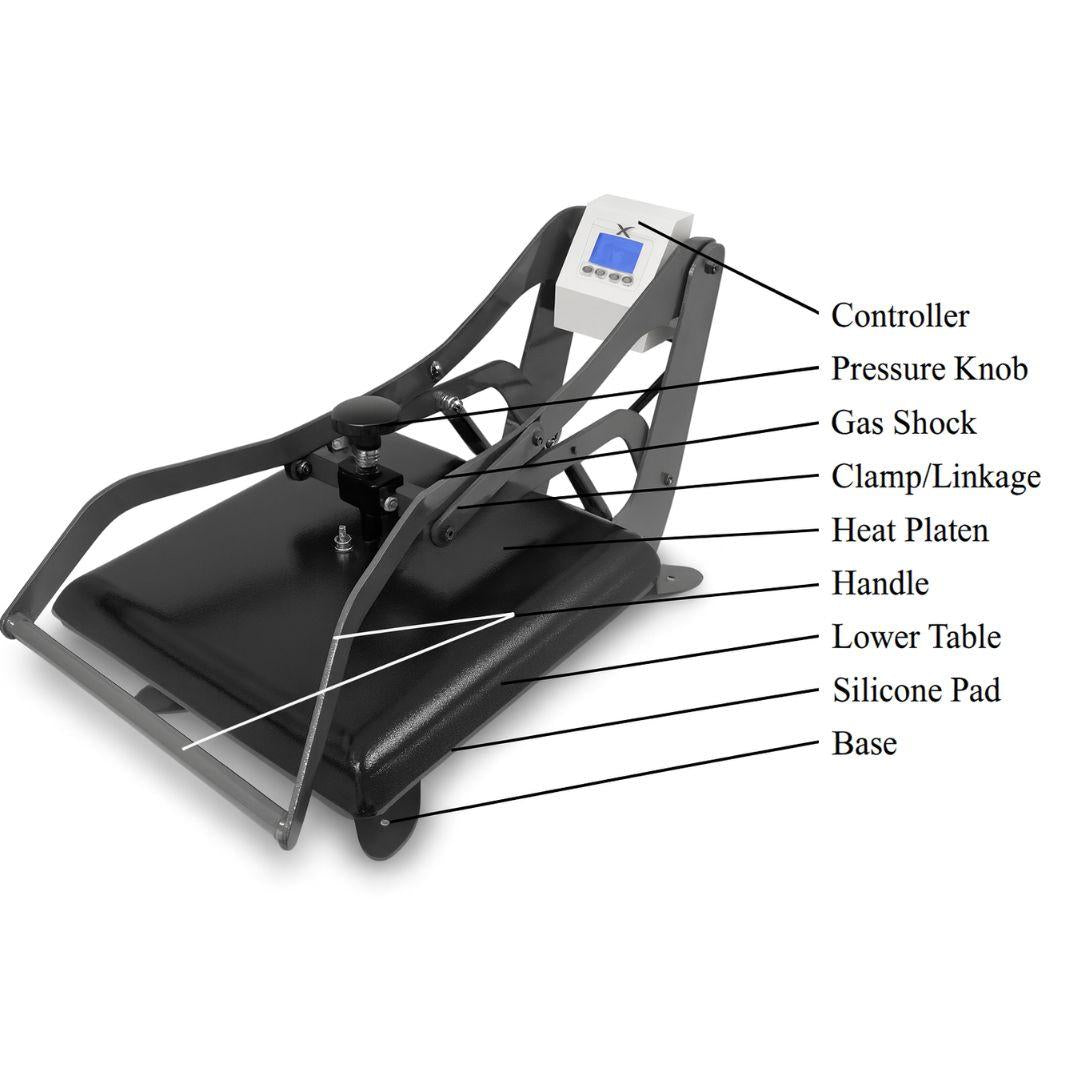
Most entry-level and mid-range heat presses use manual pressure adjustment via threaded knobs or lever systems. Operators turn adjustment knobs to increase or decrease spring tension, which translates to clamping force when the press closes.
Manual systems require calibration based on transfer type and garment thickness. DTF transfers typically need medium pressure, while sublimation often requires lighter pressure to prevent ink migration. Operators must develop feel for appropriate pressure levels through experience and testing.
Pressure consistency depends on operator technique and equipment condition. Worn springs lose tension over time, requiring increasingly tight adjustment to maintain the same effective pressure. This gradual degradation often goes unnoticed until transfer quality degrades visibly.
Manual systems offer clear advantages for certain operations:
- Simplicity - Fewer components that can fail
- Lower equipment cost - No pneumatic infrastructure required
- No air compressor needed - Eliminates ongoing maintenance obligations
- Reliable once calibrated - Works consistently for shops running similar transfer types on similar garments
Pneumatic Pressure Systems
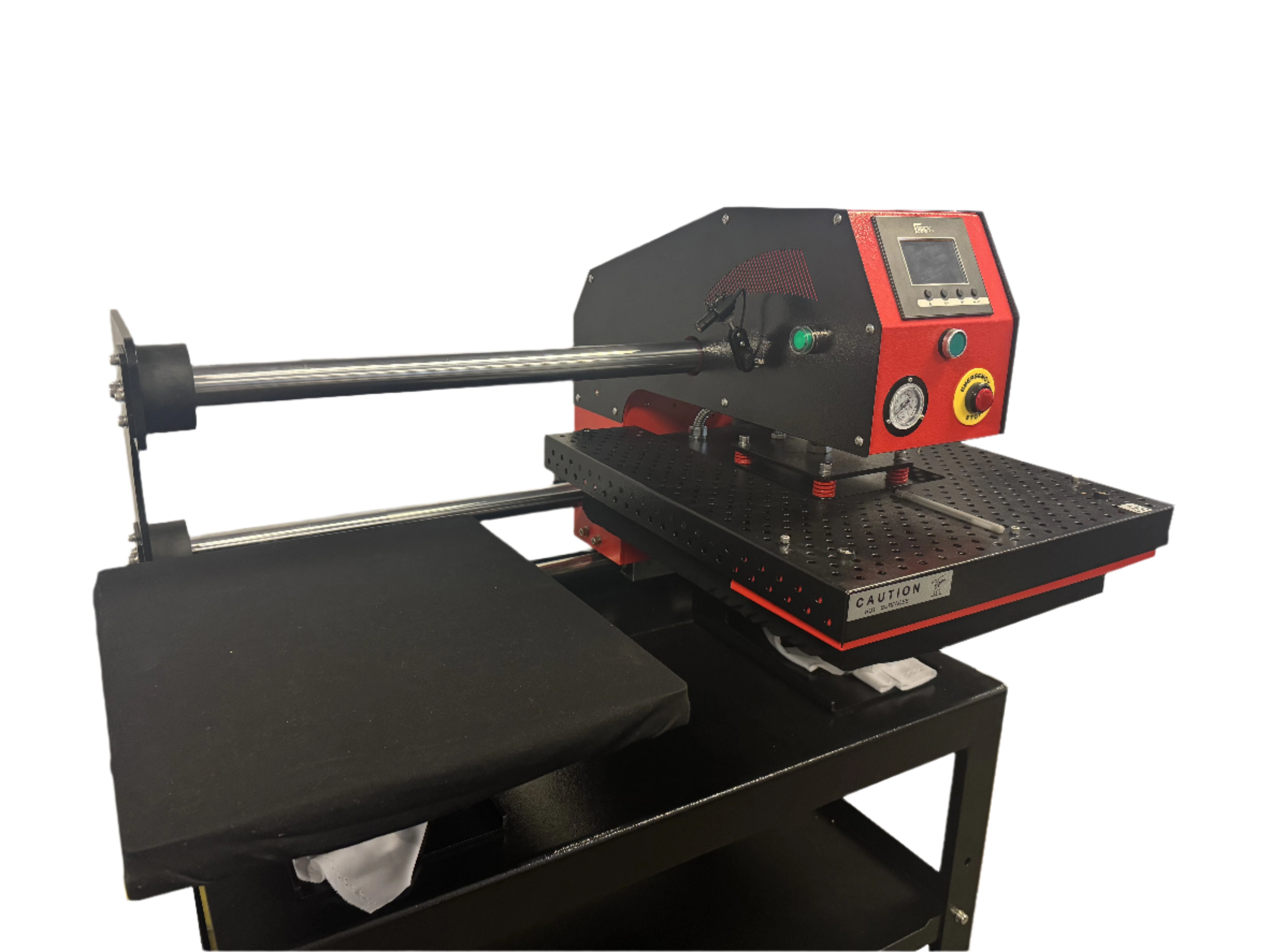
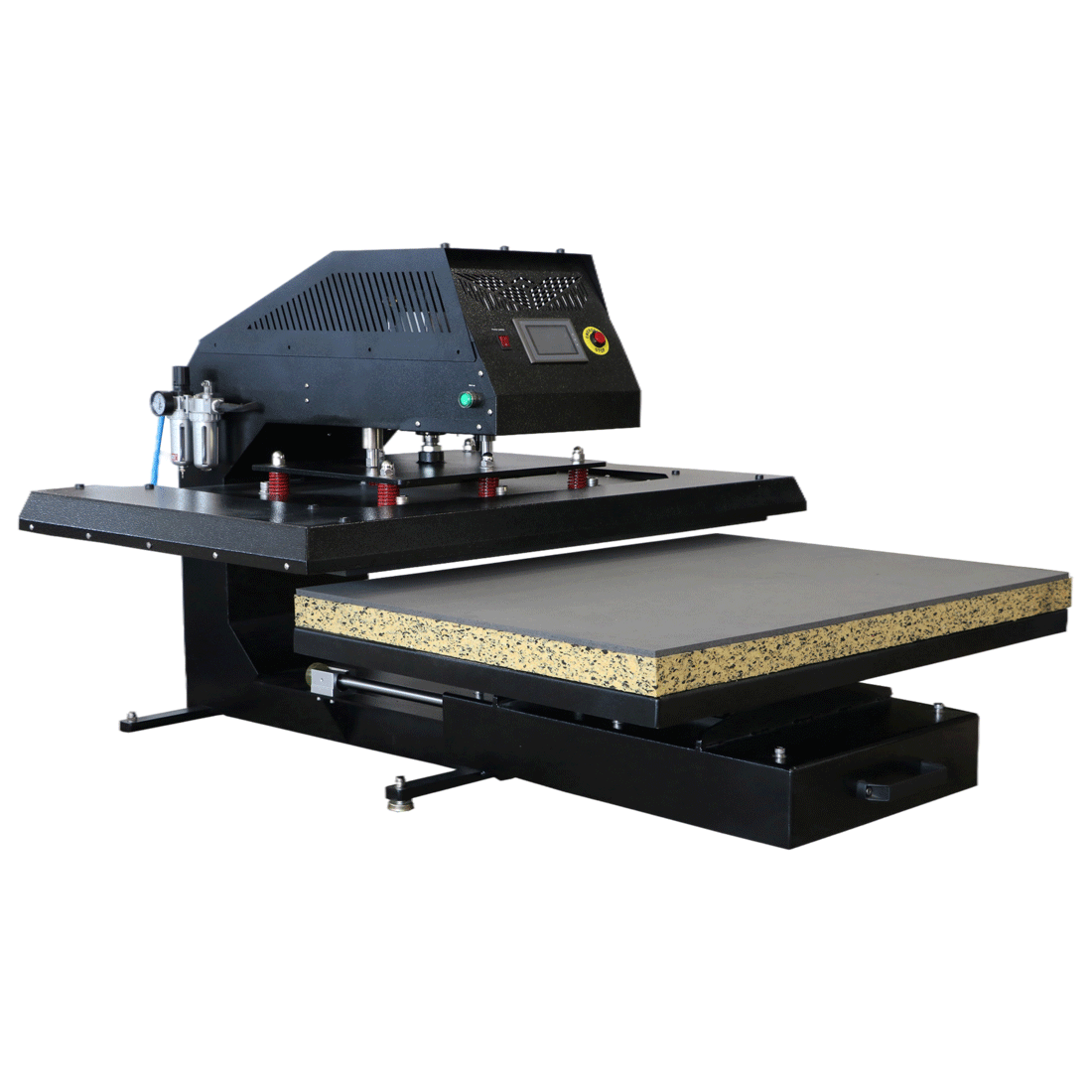
Pneumatic presses use compressed air cylinders to generate clamping force. Operators adjust pressure via regulators that control air pressure to the cylinder. This approach delivers advantages for production environments:
- Consistent force distribution - Maintains same pressure regardless of platen wear or spring fatigue
- Rapid pressure adjustment - Quick changes between jobs without mechanical recalibration
- Long-term consistency - Air pressure generates identical force whether equipment is new or heavily used
- Ideal for diverse transfer types - Efficiently handles sublimation, DTF, and HTV on the same equipment
However, pneumatic presses require air compressor infrastructure. Shops must install and maintain compressors capable of supplying adequate CFM at required PSI. This adds upfront cost and ongoing maintenance obligations. Compressor failure stops production completely until repaired.
Production environments benefit most from pneumatic systems when running diverse transfer types. The ability to precisely adjust pressure between jobs without mechanical recalibration improves efficiency and reduces setup time. This advantage compounds in shops handling multiple transfer methods on the same equipment.
Temperature Control: Digital vs Analog
Temperature control systems fall into two categories: analog dial controls and digital programmable controllers. The difference significantly affects operational consistency and transfer success rates.
Analog Controls
Analog systems use dial thermostats to set target temperature. An internal sensor monitors platen temperature and cycles heating elements on and off to maintain the selected range. These systems provide basic functionality at minimum cost.
Temperature accuracy varies widely in analog units. Budget models may show actual platen temperatures 15-25°F different from dial settings. This variance forces operators to adjust dial positions based on transfer results rather than trusting displayed temperatures. Testing becomes mandatory.
Analog controls require active monitoring during extended production runs. Temperature drift occurs as heating elements age and sensor calibration shifts. Operators must check transfer quality regularly and adjust settings when results indicate temperature changes.
Digital Controls

Digital controllers provide significant operational advantages:
- Precise temperature display - Real-time actual platen temperature eliminates guesswork
- Exact temperature input - Set specific temperatures rather than approximate dial positions
- PID control accuracy - Maintains temperature within 2-3°F of setpoint automatically
- Programmable presets - Store multiple temperatures for different transfer types
- Built-in timers with alerts - Eliminates need for external timing devices
Programmable digital systems allow operators to switch between sublimation (400°F), DTF (325°F), and HTV (315-365°F depending on type) without manual temperature adjustment. This capability prevents setup errors and speeds job transitions.
The integration of timers with audible alerts reduces operator attention requirements and improves consistency across multiple operators. Digital systems cost more upfront but reduce operational errors. Temperature precision prevents scorching, undercuring, and inconsistent results that create waste and customer complaints. For shops running production volumes above 50 units weekly, this reliability justifies the price premium.
Platen Size and Configuration Options
Platen size determines maximum print area and influences production efficiency. Standard t-shirt presses offer platens ranging from 9x12 inches to 16x20 inches, with larger specialty sizes available for specific applications.
Standard Platen Sizes
Small platens (9x12 to 12x15 inches) suit youth garments, pocket prints, and smaller adult designs. These compact sizes consume less energy to heat and cool more quickly between temperature adjustments. They work well for businesses focusing on personalized items or specialized designs.
Medium platens (15x15 inches) represent the industry standard for adult t-shirt printing. This size accommodates most chest designs, full-back prints, and oversized graphics without size restrictions. The square format supports both portrait and landscape orientations without repositioning.
Large platens (16x20 inches and above) handle oversized designs, all-over prints, and multiple small transfers simultaneously. Production shops use large platens to press multiple items in a single cycle, improving throughput. However, larger platens require more time to reach operating temperature and consume more power.
Interchangeable Platen Systems
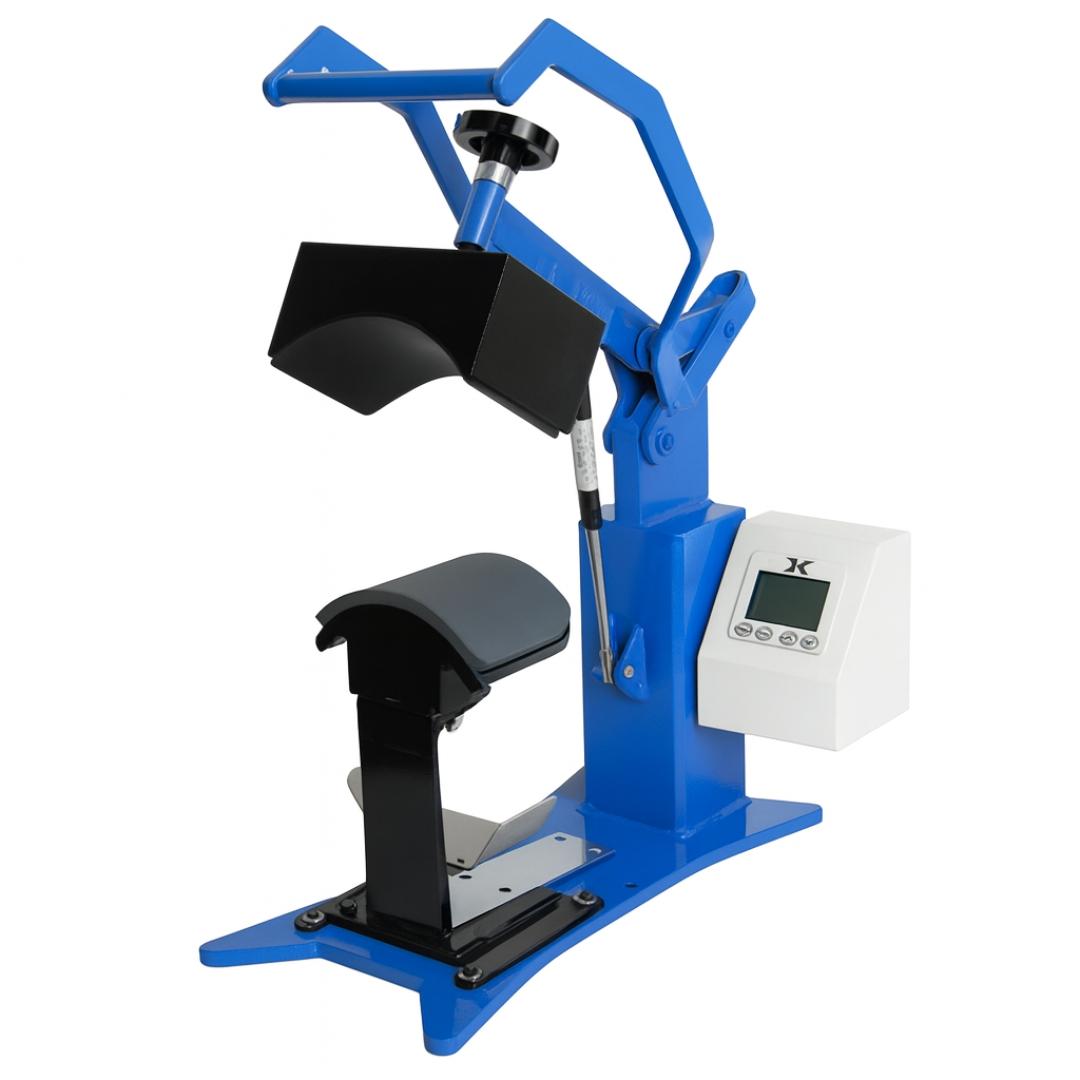
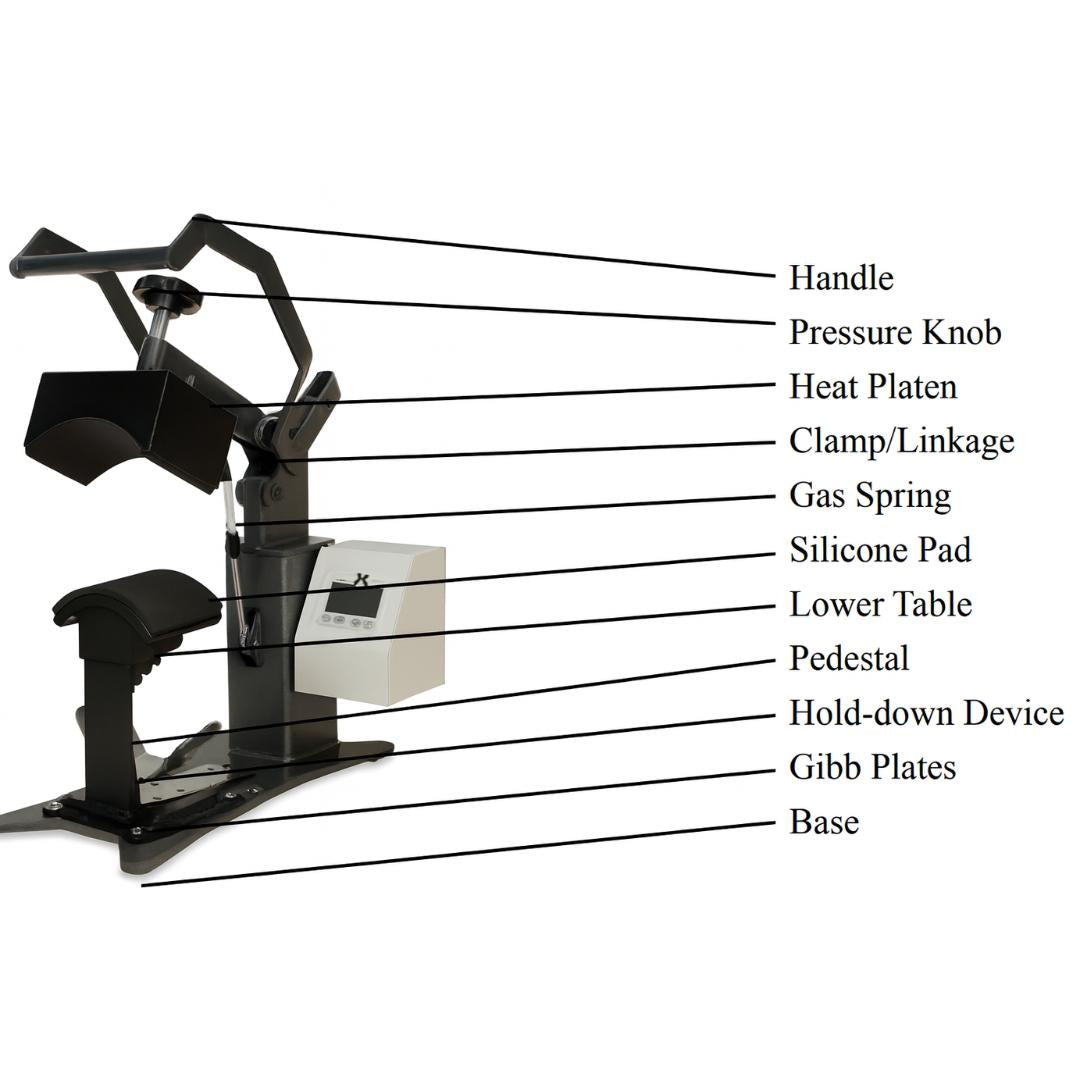
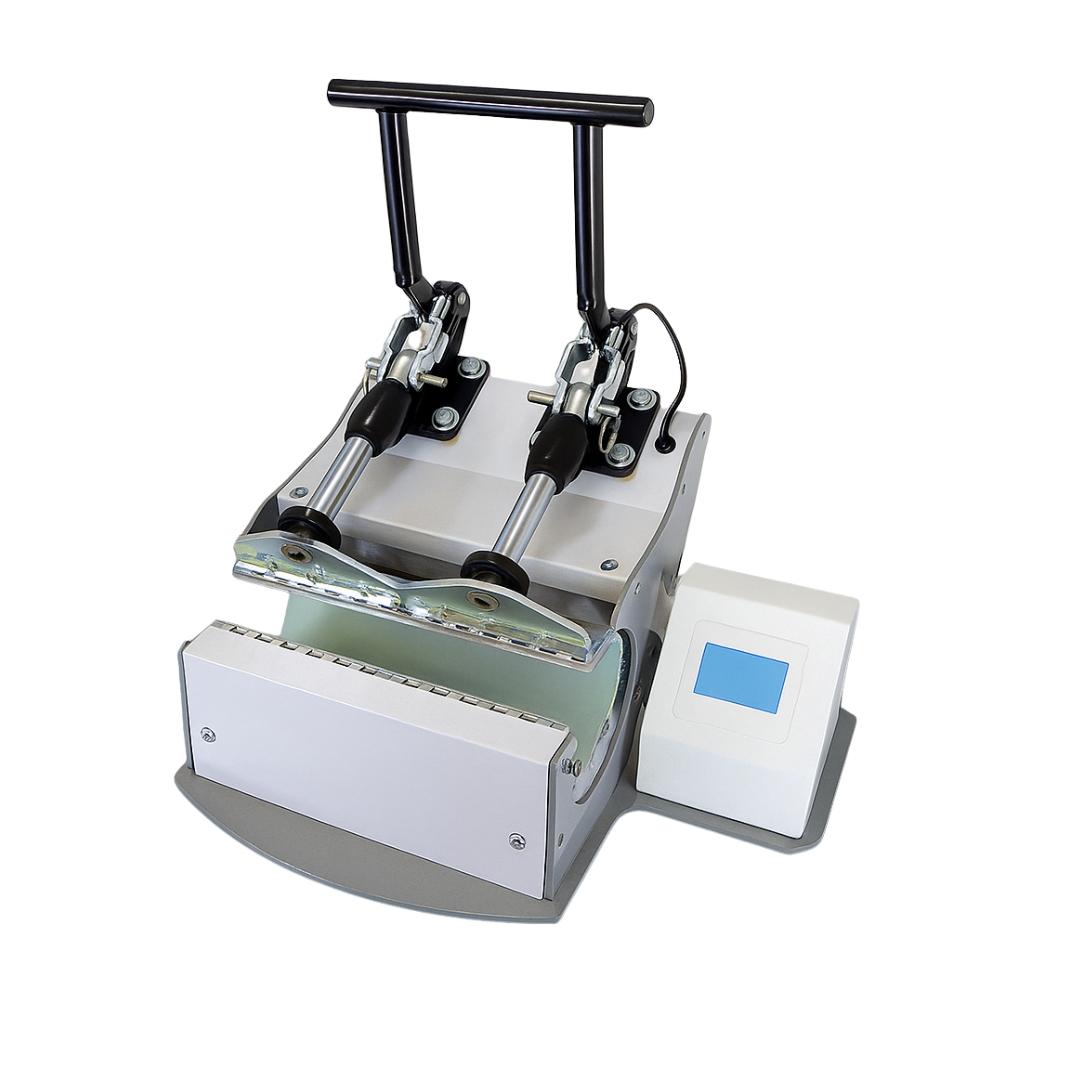
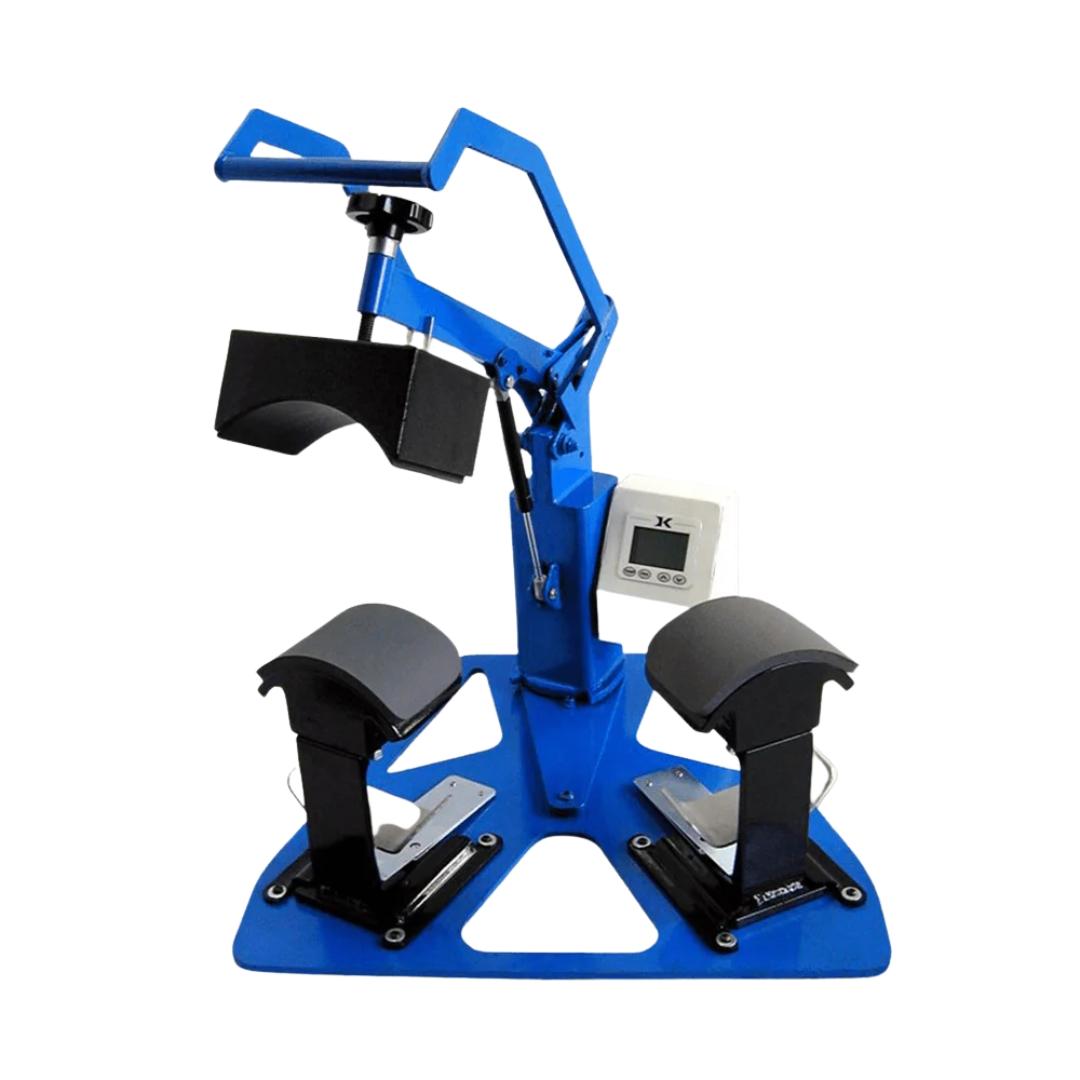
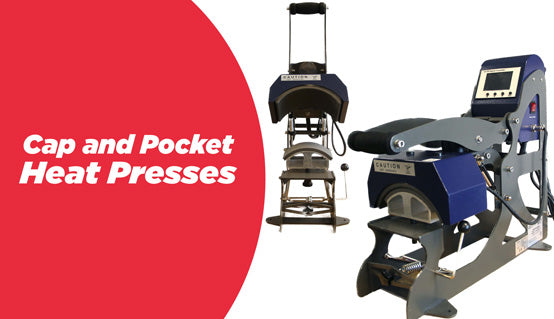
Some heat presses support interchangeable lower platens for specialized applications. Mug platens, cap platens, and plate platens expand capabilities beyond flat garments. This modularity allows equipment to serve multiple production needs without purchasing separate dedicated presses.
Interchangeable systems add initial cost but improve equipment utilization. A shop pressing t-shirts and mugs can switch between applications on the same press rather than dedicating floor space and capital to separate units. This efficiency matters particularly for businesses with limited space or diverse product catalogs.
However, frequent platen changes disrupt workflow and require recalibration. Each platen type needs specific pressure and temperature settings. Shops running high volumes of a single product type benefit less from interchangeability than businesses doing short runs of varied items.
Power Requirements and Electrical Considerations
Heat presses draw significant power to maintain operating temperature. Understanding electrical requirements prevents circuit overload, ensures safe operation, and affects long-term operating costs.
Most residential and light commercial heat presses operate on standard 110-120V household current. These units typically draw 1200-1800 watts, falling within the capacity of standard 15-20 amp circuits. Small shops can plug these presses into existing outlets without electrical upgrades.
Large production presses often require 220-240V power. These industrial units draw less amperage at higher voltage, allowing larger heating elements that reach temperature faster and maintain stability during continuous operation. However, they require dedicated circuits and professional installation.
Power consumption affects operating costs during continuous use. A 1500-watt press running eight hours daily consumes approximately 360 kWh monthly. At average commercial electricity rates, this translates to meaningful ongoing expense that compounds over years of operation.
Energy-efficient models incorporate better insulation and more responsive heating elements. These improvements reduce idle power consumption and minimize temperature overshoot, cutting electricity costs while improving temperature stability. The efficiency premium often pays for itself within 18-24 months in production environments.
Common Mistakes in Heat Press Selection
Avoid these frequent purchasing errors that lead to workflow constraints and equipment replacement:
1. Underestimating pressure requirements Light-duty presses with inadequate pressure mechanisms produce acceptable results on thin cotton t-shirts but fail completely on polyester blends or textured fabrics. This limitation only becomes apparent after purchase when attempting diverse applications.
2. Wrong size selection Purchasing a 9x12 inch press for a business planning to offer full-back designs forces either design size reduction or equipment replacement. Select platen size based on intended maximum design dimensions, not current production needs.
3. Overlooking temperature control precision Budget analog presses save money initially but create ongoing quality problems. The cumulative cost of rejected transfers, material waste, and customer complaints often exceeds the price difference between analog and digital models within the first year.
4. Ignoring warranty terms and support availability Heat presses operate as continuous-use equipment in production environments. Extended warranties and responsive technical support prevent minor issues from becoming business-interrupting failures. The lowest purchase price rarely represents the lowest total cost of ownership.
Matching Heat Press to Transfer Method
Different transfer methods impose specific requirements on heat press equipment. Sublimation, DTF, and heat transfer vinyl each demand particular temperature ranges, pressure levels, and timing precision.
Sublimation Requirements
Sublimation transfers require high temperature (typically 400°F) and medium pressure for 60 seconds. The process depends on converting solid dye to gas without melting polyester fibers. Temperature accuracy within 5°F prevents color shifts and incomplete transfer.
Sublimation benefits from even pressure distribution more than other methods. Uneven pressure creates visible variations in color density across the design. Presses with flexible upper platens or gel-padded lower platens improve results on textured or seamed garments.
DTF Transfer Requirements
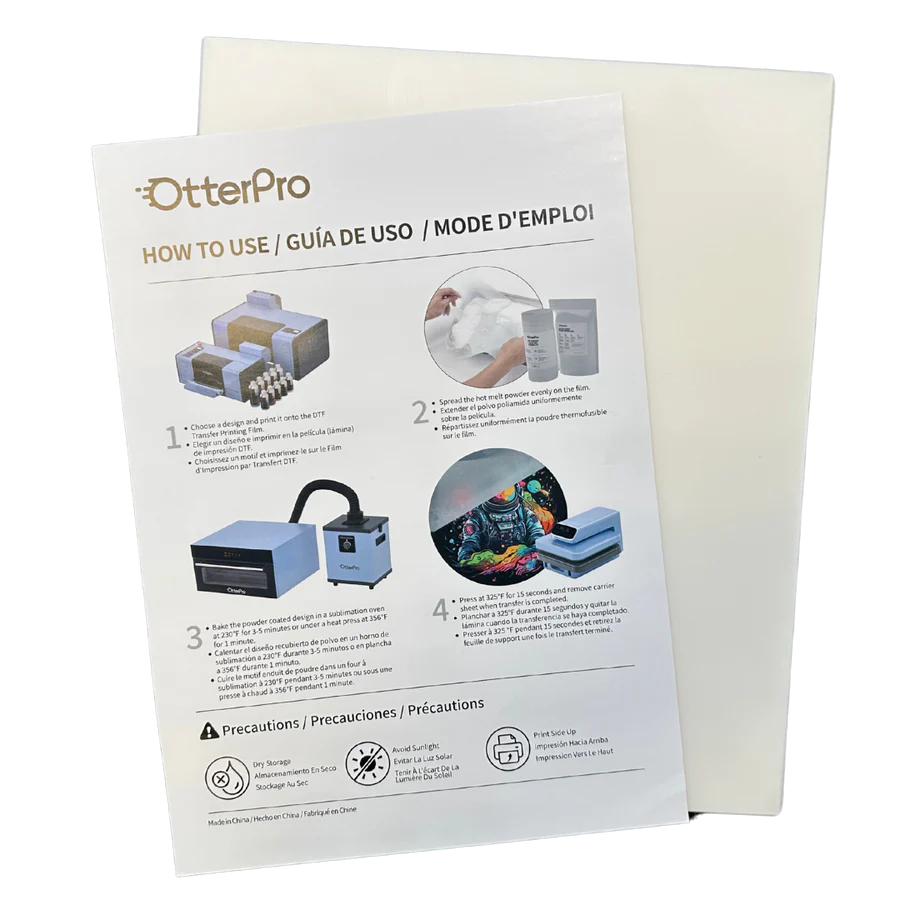
DTF transfers operate at lower temperatures (300-330°F) with medium-to-heavy pressure. The adhesive powder requires sufficient pressure to bond with fabric fibers while heat activates the adhesive. Under-pressure causes peeling while over-pressure can crack the transfer film.
DTF presses must accommodate the transfer film thickness between platen and garment. This additional layer affects pressure distribution. Presses with adjustable pressure height settings prevent crushing the film while maintaining adequate bond pressure.
Heat Transfer Vinyl Requirements
HTV transfers use varied temperatures depending on vinyl type (315-365°F typically) with firm pressure. Different HTV formulations require different parameters, making programmable temperature presets valuable. Glitter HTV needs lower temperature than standard cut vinyl to prevent melting.
HTV benefits from swing-away press designs when working with pre-positioned graphics. The ability to check alignment without disturbing the vinyl placement improves accuracy for multi-color or precisely positioned designs.
Decision Framework: Choosing the Right Heat Press
| Production Level | Recommended Design | Platen Size | Control System | Key Features |
|---|---|---|---|---|
| Hobbyist / Testing (under 25 units/week) | Clamshell | 12x15 or 15x15 inches | Digital display acceptable | Manual pressure, basic digital timer, compact footprint |
| Small Business (25-100 units/week) | Clamshell or entry swing-away | 15x15 inches | Digital with presets | Adjustable pressure, accurate temperature control, audible timer |
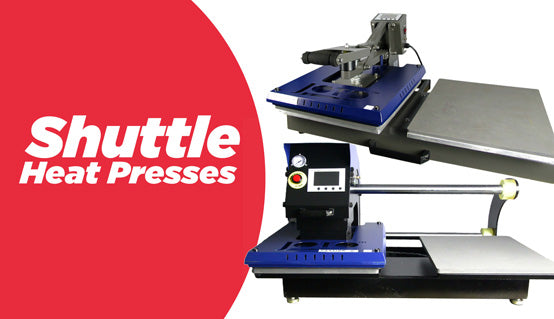
| Growing Production (100-300 units/week) | Swing-away | 15x15 or 16x20 inches | PID digital controller | Heavy-duty construction, pneumatic option, interchangeable platens |
| Commercial Production (300+ units/week) | Swing-away or auto-open | 16x20 inches | PID with multiple presets | Pneumatic pressure, auto-open timers, 220V power, extended warranty |
Long-Term Considerations and Total Cost
Purchase price represents only a portion of heat press total cost. Maintenance requirements, replacement parts availability, and operational efficiency compound over equipment lifespan.
Quality presses use replaceable Teflon sheets and silicone pads that extend platen life. Budget units often feature non-replaceable coatings that degrade after 500-1000 pressing cycles. When coating fails, the entire upper platen requires replacement at significant cost.
Heating element replacement determines whether a press remains economical to repair. Equipment using standard off-the-shelf heating elements costs $50-150 to repair when elements fail. Proprietary heating systems may require manufacturer service at $300-500 plus downtime for shipping.
Energy efficiency affects monthly operating costs in production environments. An efficient 1200-watt press running 160 hours monthly consumes approximately $25 in electricity. A less efficient 1800-watt unit performing the same work costs $37.50 monthly, or $150 annually. Over a five-year equipment life, this difference reaches $750.
Warranty coverage reveals manufacturer confidence in equipment durability. One-year warranties indicate consumer-grade construction. Three-to-five-year warranties suggest commercial-grade components and engineering. Extended warranties cost more upfront but prevent catastrophic replacement expenses during peak production periods.
Operational Workflow Impact
Heat press selection affects production bottlenecks beyond pressing time itself. Heat-up duration, cool-down requirements, and operator ergonomics influence total throughput capacity.
Presses with larger heating elements reach operating temperature faster. A quality 15x15 inch press reaches 400°F in 4-6 minutes. Budget models may require 12-15 minutes. This difference means faster daily startup and quicker recovery when changing between transfer methods requiring different temperatures.
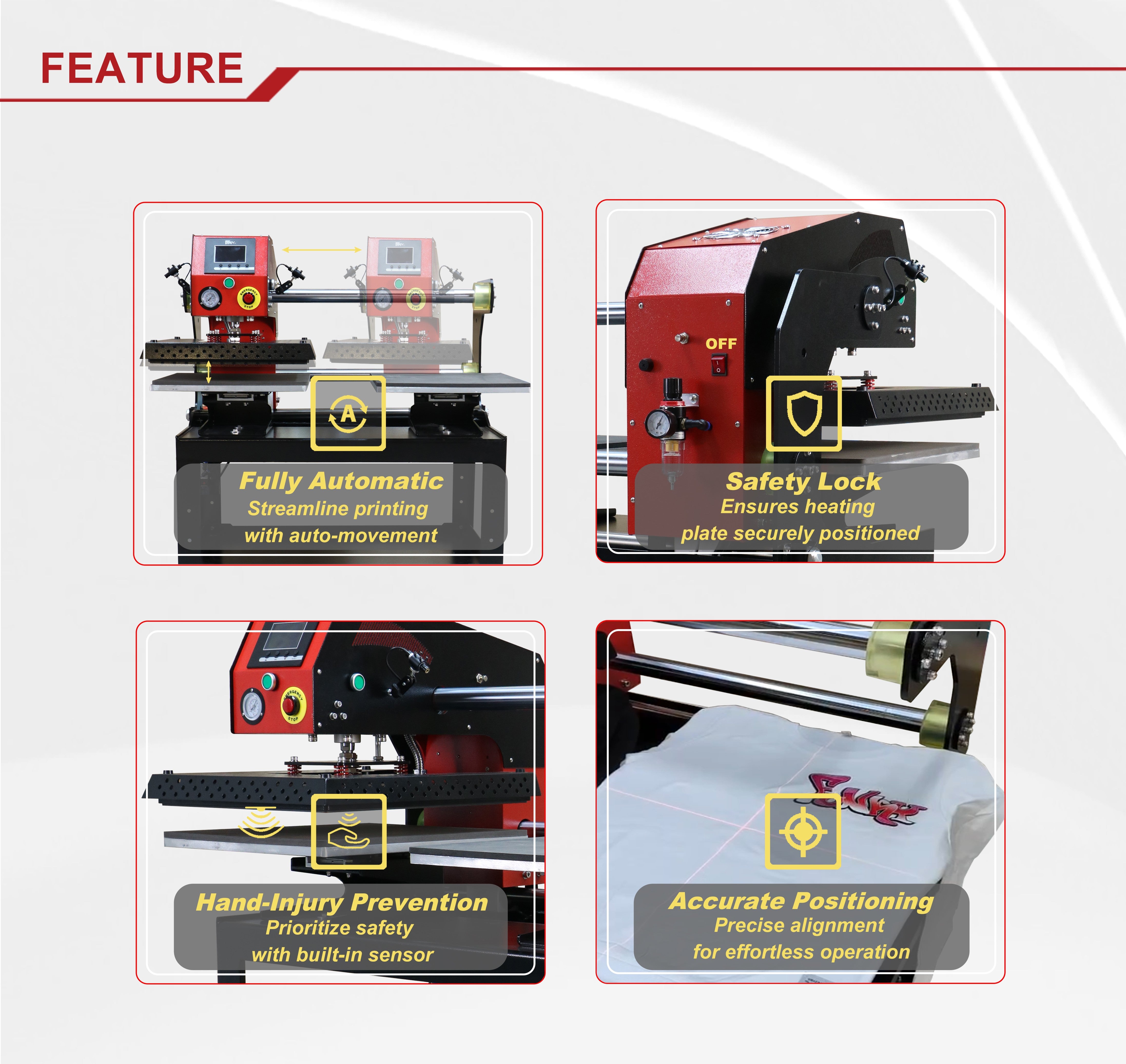
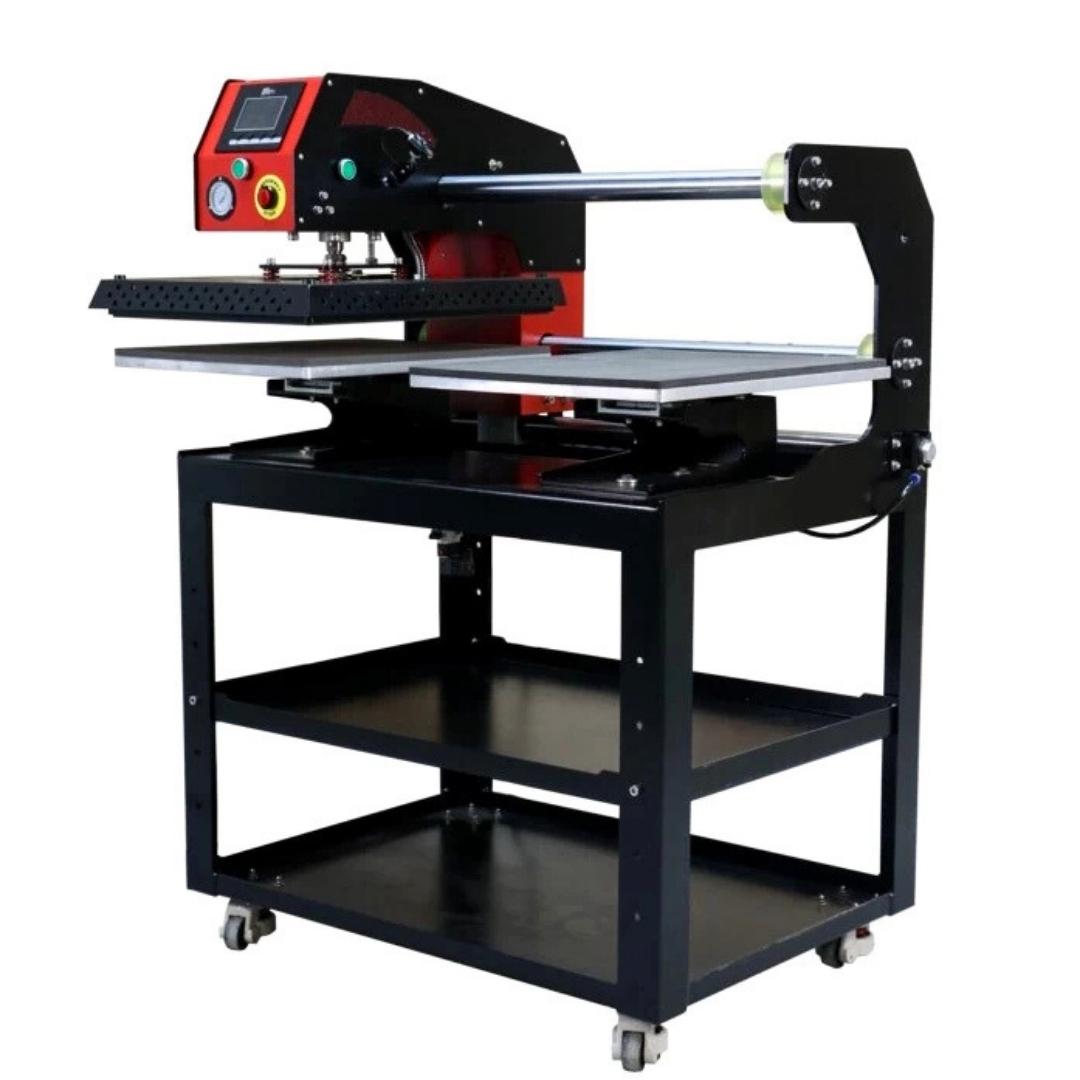
Swing-away designs reduce cycle time in multi-operator workflows. While one operator loads and unloads a garment at the lower platen, another can prepare the next item without waiting for the press to open. This parallel processing improves throughput compared to clamshell designs where the entire press blocks access during operation.
Auto-open features eliminate operator attention during pressing cycles. After the timer completes, the press automatically opens and signals completion. This allows operators to perform other tasks during the pressing cycle rather than standing idle. The productivity gain becomes significant across hundreds of weekly pressing cycles.
Frequently Asked Questions
What size heat press do I need for full-size adult t-shirt designs?
A 15x15 inch platen accommodates standard adult t-shirt chest designs and most full-back graphics comfortably. This size supports designs up to approximately 12-13 inches in width and height after accounting for garment positioning margins. Larger 16x20 inch platens provide additional capacity for oversized graphics or pressing multiple small items simultaneously.
Can I use one heat press for sublimation, DTF, and heat transfer vinyl?
Yes, quality heat presses with digital temperature controls handle multiple transfer methods effectively. Choose equipment with programmable temperature presets to quickly switch between sublimation (400°F), DTF (300-330°F), and HTV (315-365°F). Ensure the press offers adequate pressure adjustment range since each method requires different force levels for optimal results.
How long does a t-shirt heat press typically last?
Commercial-grade heat presses typically last 5-7 years under continuous production use (300+ units weekly) with proper maintenance. Light-duty consumer models may last 2-3 years at hobby production levels (under 25 units weekly). Longevity depends primarily on heating element quality, pressure mechanism construction, and replacement parts availability. Regular maintenance extends equipment life significantly.
Do I need 220V power for a t-shirt heat press?
Standard 110-120V household power suffices for most small-to-medium production heat presses. Units operating on 220-240V offer faster heat-up times and more stable temperature control during continuous operation but require dedicated circuit installation. Consider 220V only for production environments pressing more than 200 units weekly where heat-up speed and temperature stability justify the electrical infrastructure cost.
What's the difference between a clamshell and swing-away heat press for t-shirts?
Clamshell presses open vertically like a clamshell and require minimal floor space but bring the operator's hands closer to heated surfaces during garment positioning. Swing-away presses rotate the upper platen completely away from the work area, improving safety and providing better visibility for design placement. Swing-away designs excel for production environments while clamshells suit space-constrained workshops or mobile businesses.