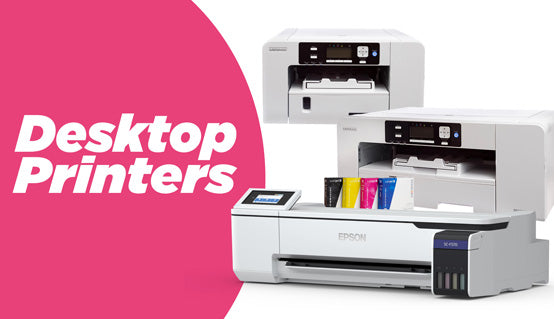
A print shop typically needs general liability insurance, commercial property insurance, and equipment breakdown coverage as the core of its policy, with workers' compensation added the moment you hire your first employee, since federal law requires it for any business with staff. The coverage that gets overlooked most often is equipment breakdown, since a standard commercial property policy frequently excludes mechanical and electrical failure, which is precisely the risk a shop running heat presses, printers, and lasers actually faces day to day.
Insurance is not a topic most shop owners enjoy researching, which is exactly why gaps show up: a policy purchased quickly at startup rarely gets revisited as equipment, staff, and risk exposure grow. This guide covers the coverage types that matter specifically for a print shop, the legal requirements that kick in as you scale, and how to actually shop for a policy rather than renewing whatever you started with, along with the coverage gaps that show up as a shop adds equipment, staff, or an online storefront.
Why Equipment Breakdown Coverage Matters More Here Than in Most Small Businesses
A standard commercial property policy protects against events like fire, storm damage, and vandalism, but it commonly excludes losses from a heat press, laser, or printer failing due to internal mechanical or electrical breakdown rather than an external event. According to IRMI, a widely used reference in the insurance industry, equipment breakdown insurance specifically covers loss from mechanical or electrical breakdown of equipment, including the cost to repair or replace it and any resulting business income lost while it is down. For a shop where a single large format press or industrial printer represents a meaningful chunk of operating capacity, that gap between standard property coverage and equipment breakdown coverage is the difference between an inconvenience and a shop that cannot fill orders for weeks.
Ask your agent directly whether equipment breakdown coverage is included in your policy or needs to be added separately, since it is frequently sold as an add-on rather than bundled automatically into a basic commercial property policy. This single question, asked once at renewal, resolves one of the most common and most expensive coverage gaps a growing shop can carry without realizing it.
General Liability: The Baseline Every Shop Needs
General liability insurance covers the most common risk scenarios for a shop that has customers physically visiting a location or fulfilling custom orders: a customer injury on your premises, property damage you accidentally cause at a client's location during delivery or installation, and legal defense costs if a dispute over a completed order escalates to a claim. This is the coverage type the U.S. Small Business Administration describes as relevant to essentially any business, regardless of size or structure, and it is typically the least expensive core policy to add relative to the risk it covers.
Workers' Compensation: A Legal Requirement, Not an Option
Federal guidance is direct on this point: any business with employees is required to carry workers' compensation insurance, alongside unemployment and disability insurance depending on your state. This requirement triggers the moment you move from a solo operation to hiring your first team member, not at some later point once the business feels more established. State requirements layer on top of federal ones and vary meaningfully, so confirm your specific state's threshold and requirements directly rather than assuming national guidance covers every local detail.
Product Liability: Relevant the Moment You Sell Physical Goods
A print shop selling finished goods, whether custom apparel, drinkware, or signage, carries product liability exposure distinct from general liability, covering claims that a product you made caused injury or harm. This applies even to shops that see themselves primarily as a service business rather than a manufacturer, since the moment you produce and sell a physical item, that item carries product liability exposure regardless of how you think of your business model day to day.
Four Steps to Actually Buying the Right Policy
Based on SBA guidance, buying business insurance well comes down to a straightforward process most shop owners skip past too quickly: assess your specific risks rather than buying a generic package, find a licensed agent who asks about your business rather than pushing a standard bundle, compare quotes and terms across multiple agents rather than accepting the first quote, and reassess coverage annually as equipment and staff change. That last step is the one most shops skip entirely, renewing the same policy year after year even after adding a laser, a second location, or additional staff that meaningfully changed the actual risk profile.
What Changes as Your Shop Scales
A one-person operation running a single heat press out of a garage has a genuinely different risk profile than a shop with five employees, a showroom customers visit, and six figures in equipment. Coverage that made sense at the smaller scale often leaves real gaps once you add employees, a public-facing location, or expensive equipment that would take months to replace out of pocket. Revisit your policy at each of these inflection points rather than waiting for the annual renewal date to prompt the conversation, since a gap in coverage matters only at the moment something goes wrong, not at the moment you finally get around to checking.
Business Income Coverage: The Add-On Most Shops Miss
Equipment breakdown coverage typically addresses the cost to repair or replace failed equipment, but a separate consideration is the income lost while that equipment sits idle. IRMI's guidance on equipment breakdown coverage notes that resulting business income and extra expense loss is often covered alongside the physical repair cost, though this varies by policy and is worth confirming explicitly rather than assuming it comes bundled in automatically. For a shop where a single large format printer or press represents a significant share of production capacity, the income lost during a multi-week repair or replacement wait can exceed the repair cost itself, which is exactly the scenario business income coverage exists to address.
Cyber Liability for Shops Taking Online Orders
A shop running an online storefront, processing customer payment information, or storing customer design files and contact details carries data and cyber risk that traditional general liability and property policies typically do not address. Cyber liability coverage handles costs associated with a data breach, payment information exposure, or a ransomware incident, none of which fall under the coverage types most shops set up when they first started as a purely in-person operation. If your shop has added online ordering or payment processing since your policy was first written, this is a specific gap worth raising with your agent rather than assuming your original policy grew to cover it automatically.
Common Mistakes That Leave Shops Underinsured
- Assuming standard property insurance covers equipment failure: Most policies exclude mechanical and electrical breakdown unless that coverage is specifically added.
- Delaying workers' compensation past the first hire: This is a legal requirement the moment you have employees, not a policy to add once the business feels bigger.
- Never reassessing coverage after buying new equipment: A policy written before you owned your largest press or printer may not reflect what replacing it would actually cost.
- Treating product liability as irrelevant to a print business: Selling any finished physical good carries this exposure, regardless of how you categorize your business.
- Accepting the first quote without comparing agents: Terms and pricing vary meaningfully between insurers for the same coverage type.
Frequently Asked Questions
Do I need equipment breakdown insurance if I already have commercial property insurance?
Likely yes. Standard commercial property policies commonly exclude losses from mechanical or electrical breakdown, which is the specific risk equipment breakdown coverage addresses. Confirm directly with your agent whether your existing policy includes this coverage or requires it as a separate add-on.
At what point am I legally required to carry workers' compensation?
Federal guidance requires it for any business with employees, though specific requirements and thresholds vary by state. Confirm your state's exact requirements rather than assuming a single national standard applies uniformly everywhere.
Does product liability insurance apply to a shop that mostly does custom orders rather than mass manufacturing?
Yes. Product liability exposure applies once you produce and sell a physical good, regardless of order volume or whether you think of the business as a manufacturer versus a service provider.
How often should I actually review my insurance coverage?
At minimum annually, per standard guidance, but also immediately after any major equipment purchase, new hire, or change in how customers interact with your business, such as opening a public-facing location. Waiting for the renewal date alone can leave real gaps unaddressed for months.
Is general liability insurance enough on its own for a small print shop?
Rarely. General liability covers a specific set of risks, mainly injury and property damage claims, but leaves gaps around equipment failure, product liability, and legally required workers' compensation once you have employees. Most shops need a combination of coverage types rather than relying on general liability alone.
Does business income coverage come automatically with equipment breakdown insurance?
Not always. Some policies bundle it in, while others sell it as a separate add-on. Confirm explicitly with your agent whether lost income during equipment repair or replacement is covered under your specific policy rather than assuming it is included by default.
Do I need cyber liability coverage if I only sell in person?
The risk is lower for a purely in-person shop with no online ordering or stored customer payment data, but it still applies if you store customer contact information, design files, or any digital records that could be exposed in a breach. Reassess this coverage the moment you add any online ordering or payment processing capability.
What is the difference between equipment breakdown insurance and a manufacturer's warranty?
A manufacturer's warranty typically covers defects in materials or workmanship for a limited period after purchase, while equipment breakdown insurance covers mechanical or electrical failure regardless of the equipment's age, as long as the policy is active. Once a warranty expires, equipment breakdown coverage becomes the main protection against a costly failure.
Building Out Your Shop's Equipment?
As your equipment list grows, so does what a solid insurance policy needs to cover. Explore our equipment collections while you review your coverage.
Shop Equipment →Related Posts

Clamshell vs Swing Away Heat Press: Which One Fits Your Shop?
Choose a clamshell heat press if you mostly press t-shirts, totes and other flat items in a compact workspace. Choose...
Read More
Why Does My Sublimation Photo Panel Have Spots?
If your sublimation photo panel comes out with a speckled, uneven black that looks worse under light, the cause is...
Read More
What Is an Eco-Solvent Printer? How It Compares to Sublimation and DTF
An eco-solvent printer is a wide-format inkjet printer that uses pigment inks carried in a mild solvent, which bite into...
Read More